- PH: +91 8828443924
- Email: Response@ShrinithaFurnace.Com

Laboratory Vacuum Tubular Furnace Manufacturer & Exporter in India
Laboratory Vacuum Tubular Furnace
High-Temperature Vacuum Tubular Furnace – 1200°C to 1450°C
Shrinitha Scientific is a manufacturer and exporter of Laboratory Vacuum Tubular Furnaces in India, specializing in high-temperature heating equipment for scientific research, material development, and industrial laboratory applications. Our Vacuum Tubular Furnaces are designed with temperature capabilities ranging from 1200°C to 1450°C to meet the requirements of advanced thermal processing under vacuum or selected controlled-atmosphere conditions.
A Laboratory Vacuum Tubular Furnace combines a precision heating system with a sealed tubular working chamber and a compatible vacuum arrangement. This configuration allows researchers to conduct thermal experiments under reduced pressure or selected gas environments, helping minimize unwanted atmospheric reactions and contamination when the process is properly configured.
Our furnaces are suitable for research laboratories, universities, material science departments, chemical laboratories, and industrial R&D facilities involved in high-temperature material processing, calcination, annealing, sintering, degassing, and material synthesis.
At Shrinitha Scientific, we provide application-specific furnace solutions with suitable heating elements, temperature controllers, vacuum connections, and work tube configurations to meet individual laboratory requirements.
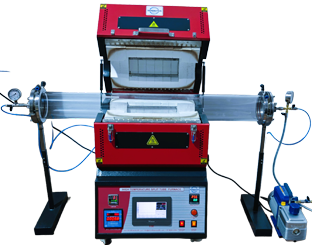
What Is a Laboratory Vacuum Tubular Furnace?
A Laboratory Vacuum Tubular Furnace is a high-temperature electric furnace designed to heat samples placed inside a tubular chamber under vacuum or a compatible controlled atmosphere.
The system generally consists of an insulated heating chamber, a work tube, vacuum-compatible sealing flanges, temperature control equipment, and a suitable vacuum pumping arrangement. The vacuum system removes gases from the working tube to establish the required pressure conditions before or during thermal processing, depending on the process design.
Compared with conventional heating equipment operating in ambient air, a properly configured vacuum tubular furnace can help reduce oxidation, limit atmospheric contamination, and support specialized thermal experiments.
Shrinitha Scientific manufactures Vacuum Tubular Furnaces with temperature capabilities from 1200°C to 1450°C, with configuration options selected according to the material, operating temperature, vacuum requirement, and intended application.
1200°C Vacuum Tubular Furnace
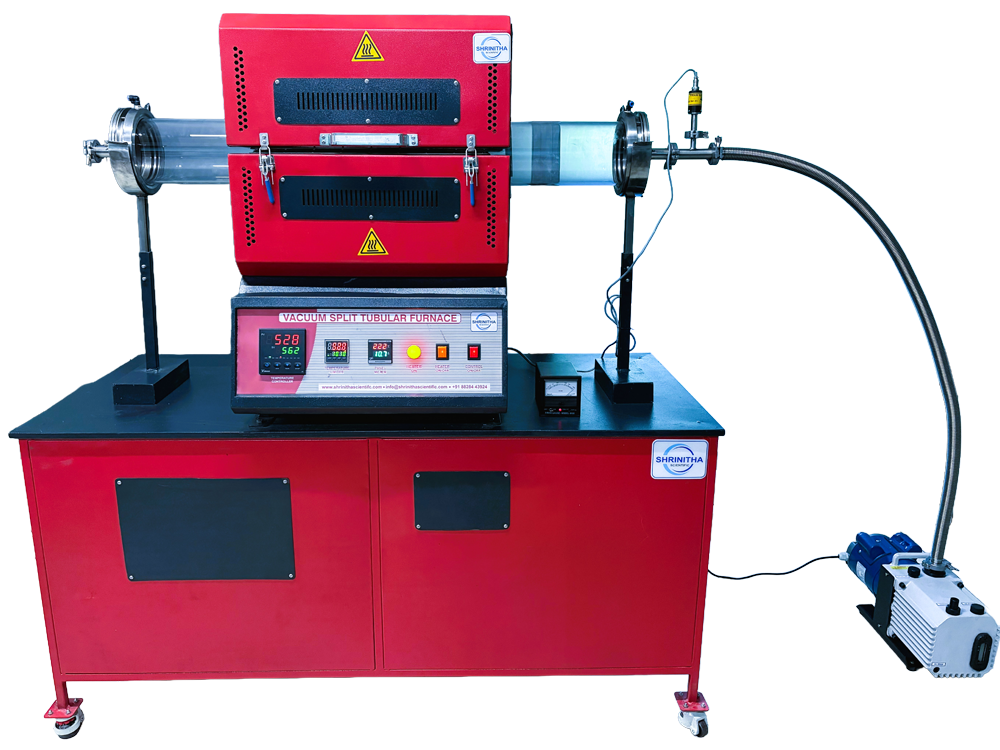
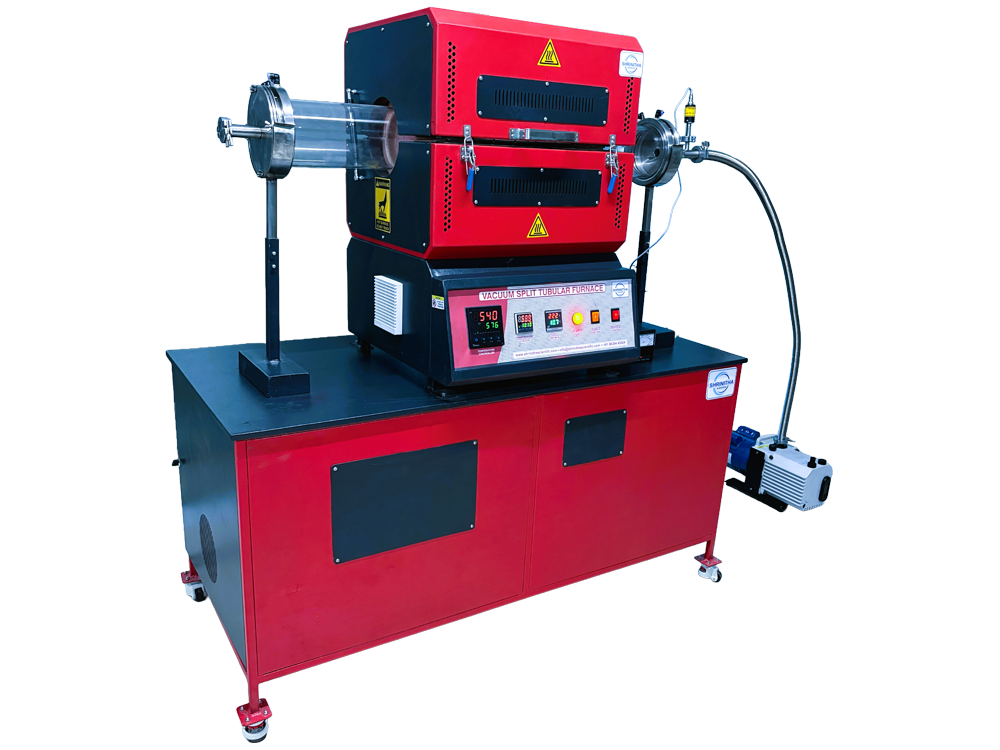
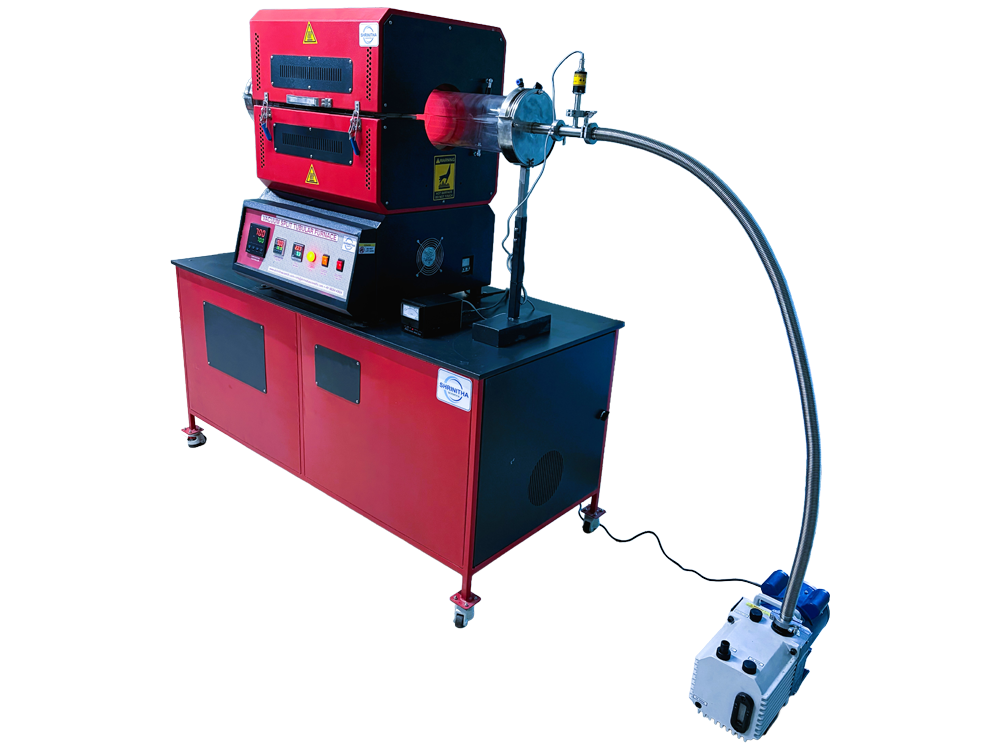
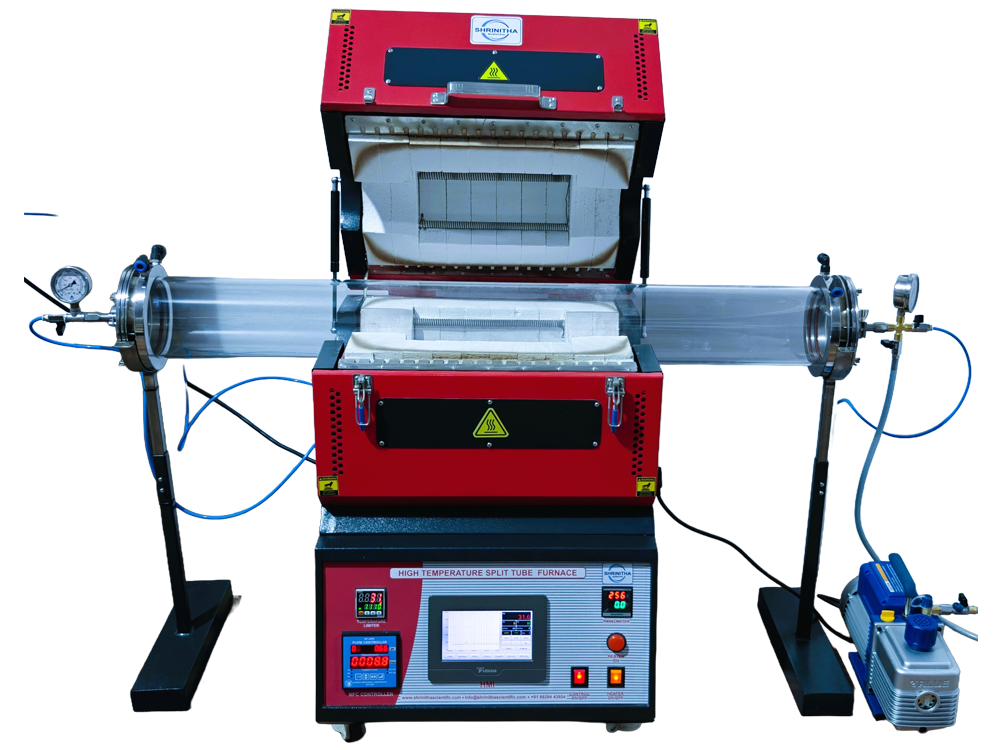
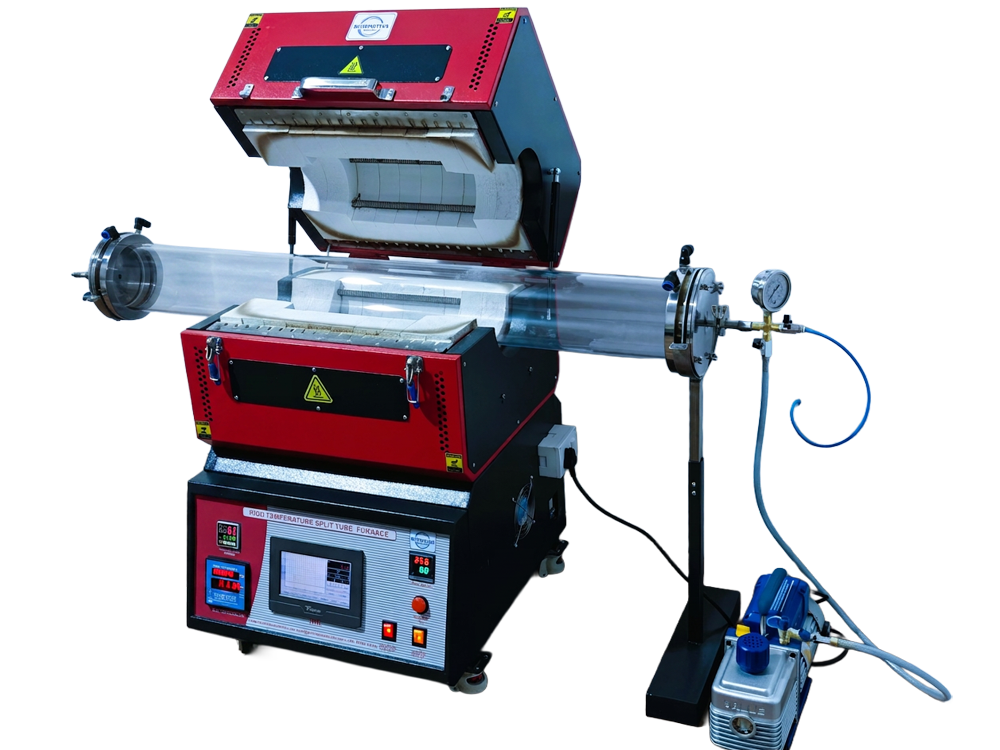
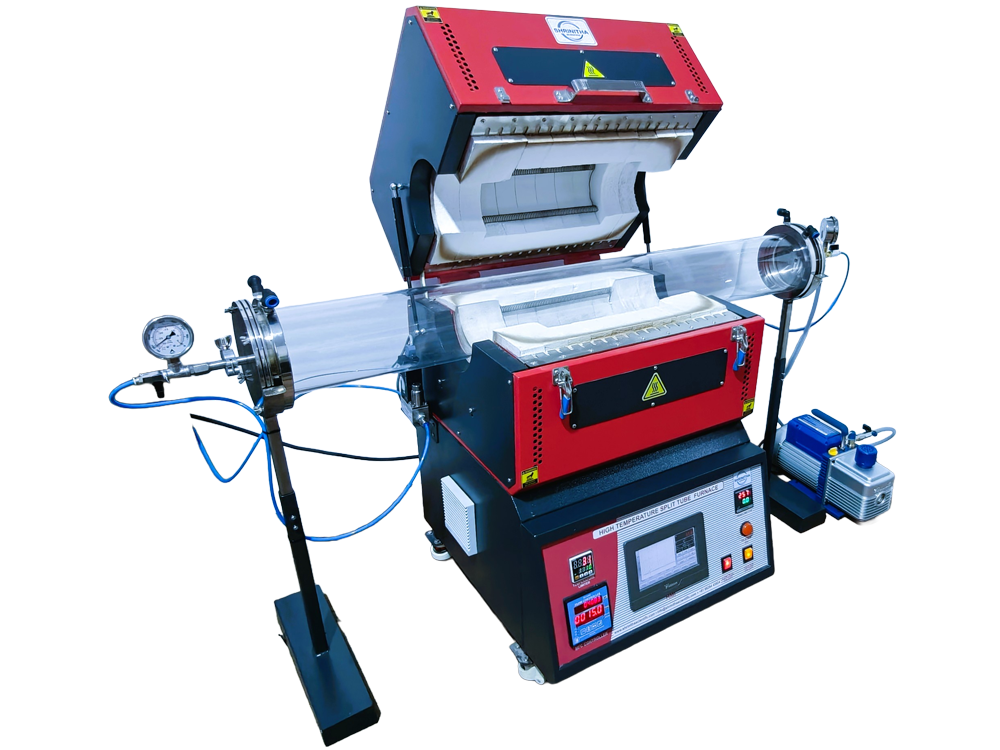
1450°C Vacuum Tubular Furnace
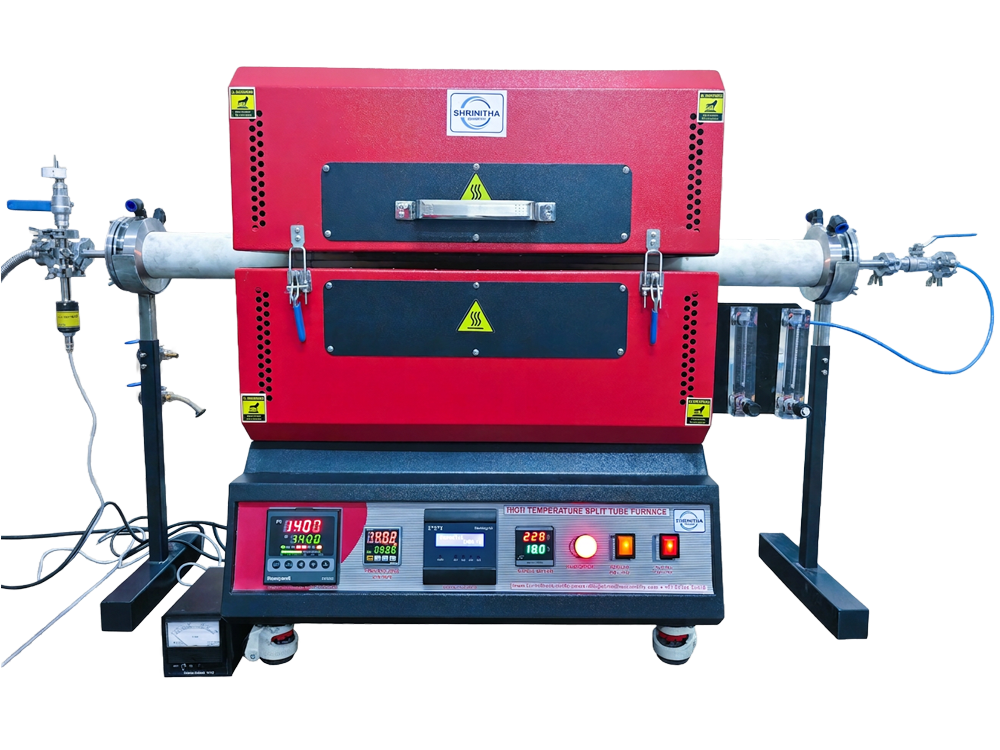
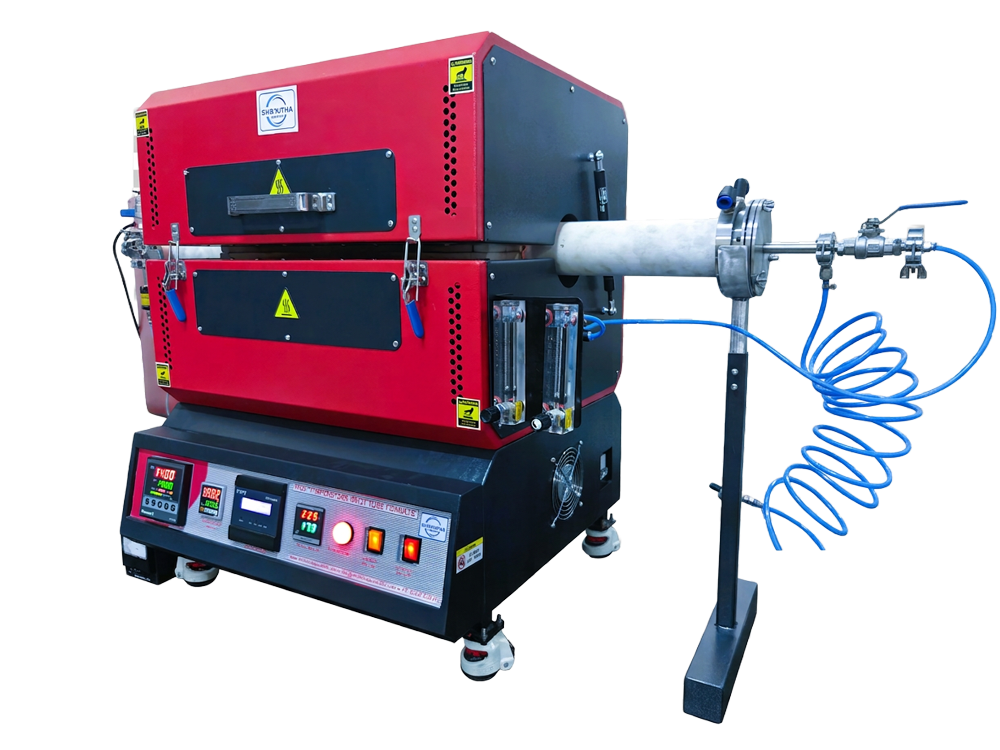
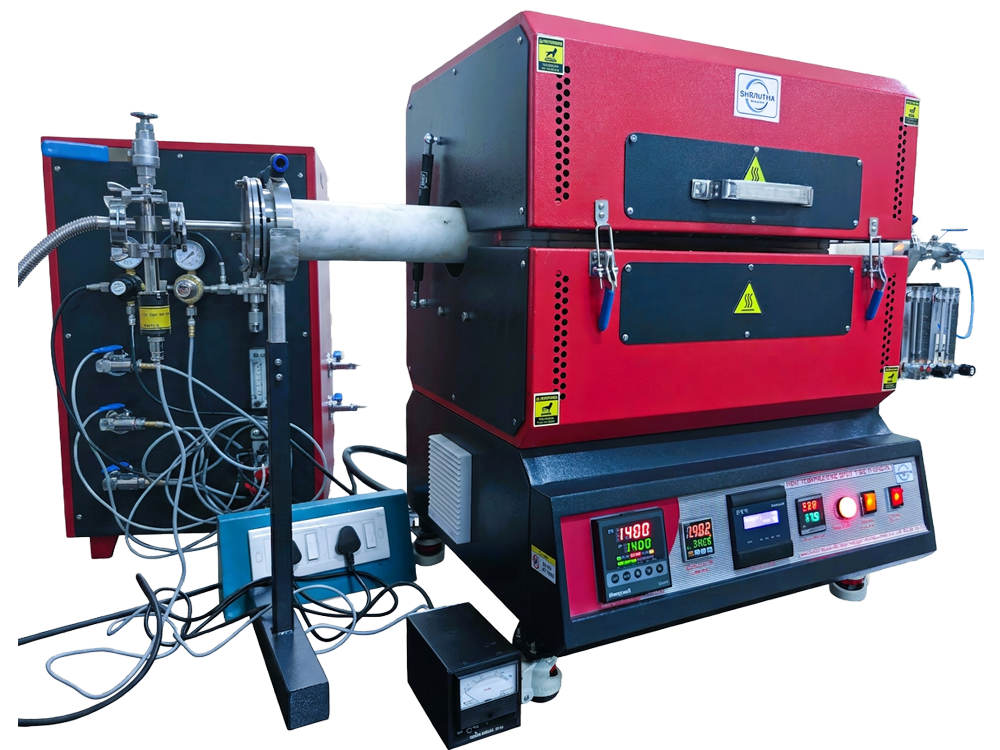
Key Features of Laboratory Vacuum Tubular Furnace
- High-temperature heating capabilities from 1200°C to 1450°C, depending on model.
- Designed for vacuum-assisted and selected controlled-atmosphere applications.
- Tubular heating chamber suitable for laboratory-scale thermal processing.
- Vacuum-compatible end flanges and sealing arrangements, as per configuration.
- Digital PID temperature controller with programmable heating options.
- Suitable high-temperature heating elements selected according to the rated temperature.
- Thermal insulation designed to support efficient furnace operation.
- Horizontal or vertical configurations, subject to model availability.
- Optional vacuum pump, pressure gauges, and vacuum fittings.
- Optional gas inlet and outlet connections for compatible process gases.
- Customizable tube dimensions, heating-zone length, and accessories.
Technical Specifications
| Parameter | Specification |
|---|---|
| Product Name | Laboratory Vacuum Tubular Furnace |
| Manufacturer | Shrinitha Scientific |
| Furnace Type | Electrically Heated Vacuum Tubular Furnace |
| Temperature Range | 1200°C to 1450°C, model dependent |
| Heating System | Electric Resistance Heating |
| Heating Element | Suitable resistance wire or high-temperature heating element, depending on model |
| Temperature Controller | Digital PID / Programmable Controller |
| Heating Zones | Single Zone / Multi-Zone, as available |
| Operating Orientation | Horizontal / Vertical, subject to model |
| Work Tube Material | Quartz / High-Purity Alumina or other compatible material |
| Vacuum Arrangement | Vacuum-compatible flanges, fittings, and pump system as selected |
| Vacuum Measurement | Suitable vacuum gauge, depending on required pressure range |
| Atmosphere | Vacuum / Compatible Controlled Atmosphere, subject to configuration |
| Insulation | High-Temperature Thermal Insulation |
| Power Supply | As per selected model |
| Customization | Available according to application requirements |
Important: The achievable vacuum level depends on the pump, sealing system, work tube, connections, and operating conditions. Maximum rated temperature and continuous working temperature may differ. Final specifications should be confirmed for the selected model.
Applications of Laboratory Vacuum Tubular Furnace
Shrinitha Scientific Vacuum Tubular Furnaces are designed to support various research and thermal processing applications.
| Application | Description |
|---|---|
| Material Science Research | Study and development of advanced materials under controlled thermal conditions. |
| Vacuum Annealing | Heat treatment of suitable materials under reduced-pressure conditions. |
| Sintering | Laboratory-scale sintering of compatible powders and ceramic materials. |
| Calcination | Thermal decomposition and treatment of suitable inorganic compounds. |
| Degassing | Removal of adsorbed gases and volatile substances from compatible materials. |
| Material Synthesis | Preparation and thermal processing of selected advanced materials. |
| Ceramic Research | High-temperature treatment of ceramic compositions and refractory materials. |
| Metallurgical Research | Investigation of material transformations and thermal properties. |
| Catalyst Research | Thermal treatment and activation of selected catalyst materials. |
| Nanomaterial Research | Preparation and thermal processing of suitable nanomaterials. |
| Chemical Research | High-temperature laboratory experiments under selected atmospheric conditions. |
| Academic Research | Scientific experiments and advanced material studies in educational institutions. |
Advantages of Laboratory Vacuum Tubular Furnace
1. Reduced Atmospheric Contamination
Vacuum operation can reduce the presence of unwanted gases around the sample, helping minimize oxidation and atmospheric interference during suitable thermal processes.
2. Controlled Processing Environment
The combination of a tubular heating chamber, vacuum equipment, and compatible gas connections supports experimental conditions that are difficult to achieve in conventional air-operated furnaces.
3. High-Temperature Performance
Temperature capabilities from 1200°C to 1450°C make these furnaces suitable for a range of advanced laboratory thermal processing applications.
4. Flexible Experimental Configuration
Different work tube materials, heating lengths, vacuum accessories, and operating orientations can be selected to accommodate specific research requirements.
5. Programmable Temperature Control
A suitable programmable controller allows researchers to establish heating rates, holding periods, and temperature cycles according to the selected model.
6. Application-Specific Design
The furnace can be configured according to the sample dimensions, process temperature, required vacuum level, atmosphere, and laboratory operating requirements.
Optional Accessories
The following accessories can be selected according to the furnace model and application requirements:
- Vacuum pump system with compatible fittings.
- Vacuum pressure gauges suitable for the required pressure range.
- Stainless steel vacuum flanges and sealing arrangements.
- Water-cooled flanges, where required by the design.
- Quartz or high-purity alumina work tubes.
- Gas inlet and outlet connections.
- Gas flow meters and compatible gas control accessories.
- Programmable temperature controller.
- Over-temperature protection system.
- Multi-zone temperature control system.
- Temperature data logging and communication interfaces.
- Furnace support stand or table.
Laboratory Vacuum Tubular Furnace Manufacturer & Exporter in India
Shrinitha Scientific manufactures and exports Laboratory Vacuum Tubular Furnaces for research laboratories, universities, industrial R&D departments, and scientific institutions in India and international markets.
Our Vacuum Tubular Furnaces are designed for high-temperature applications requiring controlled thermal processing under vacuum or selected compatible atmospheres. With temperature capabilities from 1200°C to 1450°C, we offer application-specific configurations to address diverse research and laboratory requirements.
Contact Shrinitha Scientific to discuss your required operating temperature, vacuum level, work tube dimensions, and application details. Our team can assist you in selecting a suitable furnace configuration and provide the relevant technical specifications and quotation.
Frequently Asked Questions (FAQs)
1. What is the temperature range of Shrinitha Scientific Vacuum Tubular Furnace?
Shrinitha Scientific manufactures Laboratory Vacuum Tubular Furnaces with temperature capabilities ranging from 1200°C to 1450°C. The exact temperature rating depends on the selected model and heating configuration.
2. What is the purpose of a vacuum tubular furnace?
A vacuum tubular furnace is used to heat materials under reduced pressure or compatible controlled-atmosphere conditions. It is suitable for processes requiring reduced atmospheric contamination, such as vacuum annealing, degassing, sintering, and material research.
3. Which vacuum pump is used with a Laboratory Vacuum Tubular Furnace?
The vacuum pump is selected according to the required pressure level, chamber volume, gas load, and process conditions. Rotary vane pumps or other suitable pumping systems may be used, with additional pumping stages where required.
4. Can a vacuum tubular furnace operate under an inert gas atmosphere?
Yes. Selected configurations can support compatible inert gases, such as nitrogen or argon, through suitable gas connections and control accessories. Gas compatibility and operating safety must be confirmed for the selected system.
5. Which work tube is suitable for a 1450°C Vacuum Tubular Furnace?
High-purity alumina is generally considered for applications approaching this temperature range, subject to the material grade and manufacturer's rating. Quartz tubes have lower temperature limits and should not be used beyond their specified operating conditions.
6. Can Shrinitha Scientific provide a customized Vacuum Tubular Furnace?
Yes. Customized configurations can be discussed for heating-zone length, work tube dimensions, temperature range, vacuum pumping arrangement, operating orientation, and controller options.
7. Which industries use Laboratory Vacuum Tubular Furnaces?
These furnaces are used in material science, metallurgy, ceramics, chemical research, nanotechnology, academic institutions, and industrial research and development facilities.