- PH: +91 8828443924
- Email: Response@ShrinithaFurnace.Com

Rapid Thermal Annealing Furnace (RTA Furnace)
Rapid Thermal Annealing Furnace Manufacturer & Exporter in India
Shrinitha Scientific is a manufacturer and exporter of Laboratory Rapid Thermal Annealing Furnaces (RTA Furnaces) in India. Our RTA Furnaces are designed for specialized high-temperature processing applications requiring rapid heating, controlled thermal cycles and precise treatment of samples and advanced materials.
With an operating temperature range of 1200°C to 1450°C, our Rapid Thermal Annealing Furnaces are suitable for semiconductor research, thin-film processing, material science, electronic materials, wafer annealing and laboratory research applications.
The RTA Furnace is designed to expose samples to a carefully controlled high-temperature cycle for a specified duration, followed by controlled cooling. Its application-oriented configuration makes it suitable for research involving semiconductor substrates, thin films, advanced ceramics and other temperature-sensitive materials.
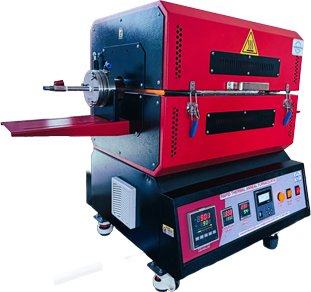
What is a Rapid Thermal Annealing Furnace?
A Rapid Thermal Annealing Furnace (RTA Furnace) is a specialized thermal processing system used to heat materials rapidly to a selected temperature and maintain them under controlled conditions for a short, specified duration.
Unlike conventional furnaces that typically process materials through comparatively longer heating cycles, an RTA Furnace is designed to achieve faster thermal transitions and localized sample treatment. This enables researchers to study material properties while limiting unnecessary exposure to elevated temperatures.
Rapid thermal annealing is widely associated with semiconductor processing, including dopant activation, thin-film modification, contact annealing and repair of material damage caused by processing techniques. Depending on the system configuration, heating may be achieved using high-intensity infrared or halogen lamps, with temperature measurement and process control selected according to the application.
Shrinitha Scientific offers RTA Furnace configurations for laboratory and research applications, with temperature capabilities from 1200°C to 1450°C.
Rapid Thermal Annealing Furnace (RTA Furnace)
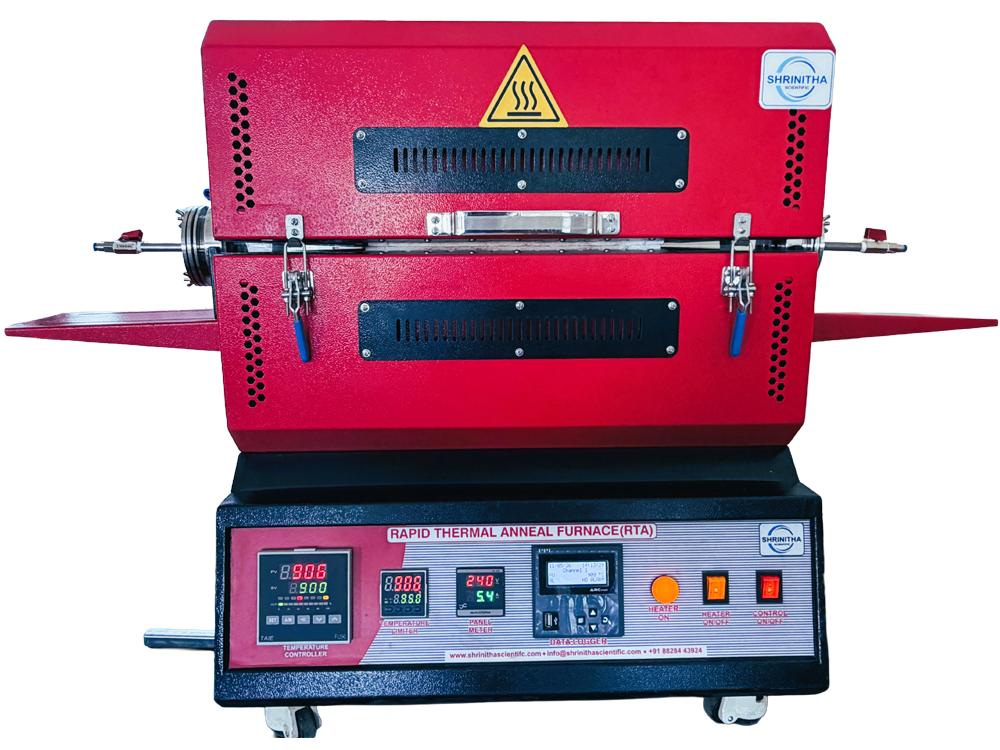
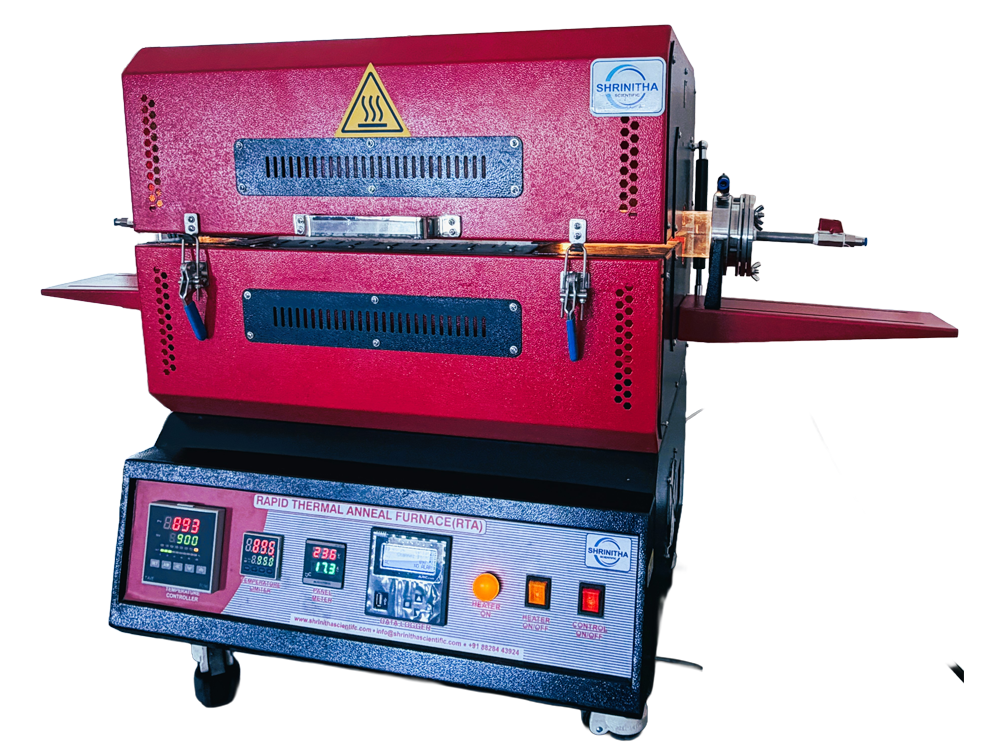
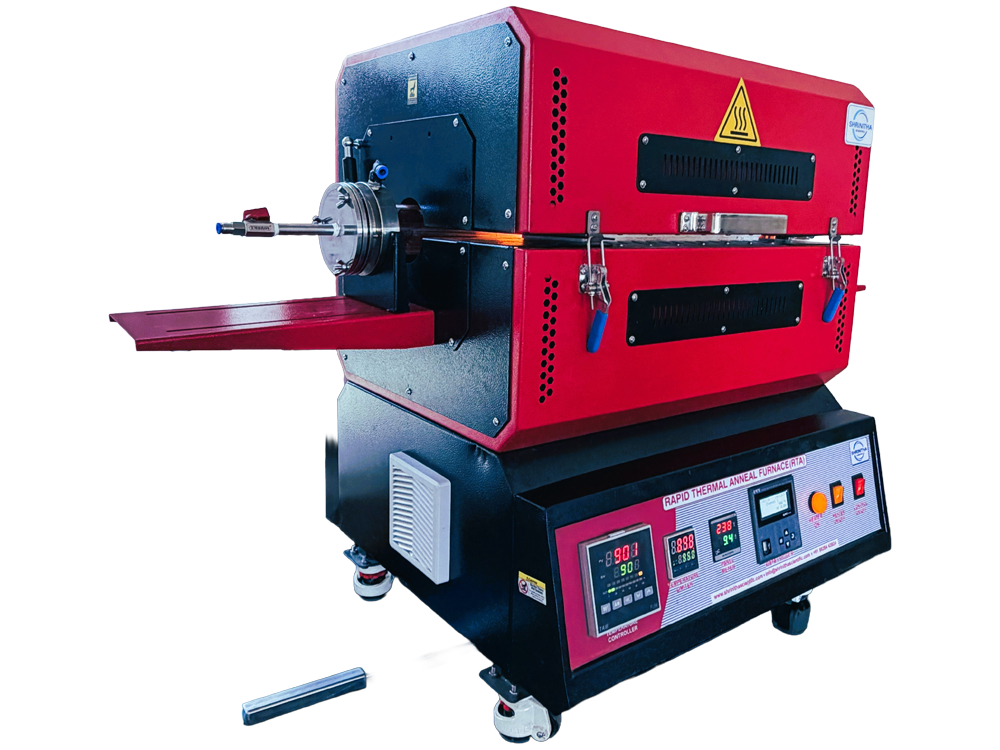
Key Features of Rapid Thermal Annealing Furnace
- High-temperature processing capability from 1200°C to 1450°C.
- Designed for rapid thermal processing and short-duration annealing cycles.
- Suitable for semiconductor and advanced material research.
- Heating arrangement selected according to the furnace configuration.
- Controlled heating and temperature holding.
- Provision for rapid heating and cooling, depending on model configuration.
- Digital temperature control system.
- Programmable heating and annealing cycles, as per model.
- Suitable for wafer, substrate and small-sample processing.
- Application-specific sample holders and susceptors can be provided.
- Gas atmosphere control provisions available as per requirement.
- Vacuum-compatible configuration can be considered for suitable models.
- Customizable process chamber and sample accommodation.
- Suitable for laboratory research, academic institutions and industrial R&D facilities.
Technical Specifications of RTA Furnace
| Parameter | Specification |
|---|---|
| Product Name | Rapid Thermal Annealing Furnace |
| Abbreviation | RTA Furnace |
| Product Category | Rapid Thermal Processing Furnace |
| Operating Temperature Range | 1200°C to 1450°C |
| Heating System | Rapid thermal heating arrangement, as per model |
| Heating Method | Infrared / lamp-based or other suitable configuration |
| Temperature Control | Digital / PID-based process control, as per model |
| Temperature Measurement | Thermocouple / pyrometer-based arrangement, depending on configuration |
| Heating Rate | Application- and model-dependent |
| Cooling Rate | Application- and model-dependent |
| Annealing Duration | Programmable or process-dependent |
| Sample Type | Wafers, substrates, thin films and suitable laboratory samples |
| Sample Holder | Customized holder or susceptor, as required |
| Atmosphere | Ambient or controlled gas atmosphere, depending on configuration |
| Gas Supply | Optional gas inlet and flow-control arrangements |
| Vacuum Provision | Available for compatible customized configurations |
| Process Chamber | As per model and application |
| Temperature Programming | Available as per model |
| Data Logging | Optional, depending on controller configuration |
| Power Supply | As per furnace configuration |
| Customization | Available according to application requirements |
Technical note: The specified 1200°C–1450°C range refers to the intended temperature capability across suitable configurations. Maximum temperature, heating rate, cooling rate, sample size, atmosphere and operating duration are interdependent and must be confirmed for the selected model.
Working Principle of Rapid Thermal Annealing Furnace
The Rapid Thermal Annealing Furnace works by applying a controlled thermal cycle to a sample or substrate. The process is designed to bring the sample to a selected temperature, maintain it for a required period and then cool it according to the process conditions.
1. Sample Preparation and Loading
The wafer, substrate or material sample is prepared and placed on a suitable sample holder or susceptor. The holder is selected according to sample geometry, thermal characteristics and process requirements.
2. Process Setup
The required annealing temperature, heating profile, holding duration and cooling conditions are selected using the control system.
If the process requires a controlled atmosphere, the appropriate gas supply and chamber conditions are established before heating.
3. Rapid Heating
The heating system raises the sample temperature according to the programmed or selected thermal profile. In lamp-based RTA systems, high-intensity radiation is used to deliver heat rapidly to the sample.
4. Annealing at the Required Temperature
The sample is maintained at the selected temperature for the specified duration. This thermal exposure can modify the material's structure, interfaces, electrical characteristics or other properties, depending on the material and process.
5. Controlled Cooling
After the annealing period, the sample is cooled according to the required process profile. Cooling behaviour depends on the heating system, chamber design, sample holder and cooling arrangement.
6. Sample Removal and Evaluation
Once the sample reaches an appropriate handling temperature, it can be removed for further testing, characterization or subsequent processing.
Types of Rapid Thermal Annealing Furnace
Shrinitha Scientific can configure RTA Furnaces according to different laboratory and research requirements.
1. Lamp-Based Rapid Thermal Annealing Furnace
This configuration uses high-intensity heating lamps to deliver rapid thermal energy to a sample. It is particularly relevant to applications requiring short heating cycles and localized substrate processing.
2. Semiconductor Wafer Annealing Furnace
Designed for research involving semiconductor wafers and suitable substrates. It can be configured for applications such as dopant activation, implant annealing and contact-related thermal processing.
3. Controlled Atmosphere RTA Furnace
This configuration includes provisions for introducing selected process gases into the chamber. It is suitable for processes requiring inert, oxidizing or other compatible atmospheric conditions.
The actual atmosphere depends on the material, process chemistry and furnace configuration.
4. Vacuum Rapid Thermal Annealing Furnace
A vacuum-compatible configuration can be considered for applications where reduced-pressure processing is required. Chamber sealing, vacuum equipment and pressure-control provisions depend on the selected system.
5. Programmable RTA Furnace
A programmable configuration allows users to define heating profiles, temperature holding periods and process sequences according to the research requirement.
6. Customized Rapid Thermal Processing Furnace
Customized systems can be developed according to substrate dimensions, process temperature, heating profile, sample holder, atmosphere requirements and laboratory operating conditions.
Applications of Rapid Thermal Annealing Furnace
The Rapid Thermal Annealing Furnace is particularly relevant to semiconductor research, microelectronics and advanced material development.
Semiconductor and Microelectronics Applications
- Semiconductor wafer annealing
- Dopant activation studies
- Ion implantation damage recovery
- Semiconductor junction processing research
- Ohmic contact annealing
- Contact alloying studies
- Silicon and compound semiconductor research
- Thin-film semiconductor treatment
Thin-Film and Advanced Material Applications
- Thin-film crystallization
- Film densification
- Modification of film-to-substrate interfaces
- Material phase transformation studies
- Surface modification research
- Advanced coating research
- Thermal treatment of deposited films
- Stress relaxation studies
Electronic and Energy Material Applications
- Electronic material research
- Solar cell material processing
- Photovoltaic thin-film studies
- Battery material research
- Functional oxide research
- Advanced electronic substrate processing
Academic and Industrial Research
- University research laboratories
- Semiconductor R&D centres
- Materials science laboratories
- Microelectronics development facilities
- Thin-film research institutions
- Industrial process development laboratories
- Advanced materials characterization facilities
The exact suitability of the furnace for any process depends on the substrate, temperature profile, atmosphere and system configuration.
Advantages of Rapid Thermal Annealing Furnace
Rapid Thermal Processing
The RTA concept enables samples to undergo carefully controlled high-temperature exposure over relatively short processing cycles. This can be useful when prolonged heating is undesirable.
Controlled Thermal Budget
The combination of selected temperature and annealing duration allows researchers to investigate material changes while managing the overall thermal exposure of the sample.
Semiconductor Research Applications
RTA is widely used for semiconductor processes such as dopant activation, contact annealing and modification of interfaces between thin films and substrates.
High-Temperature Capability
The specified operating capability of 1200°C to 1450°C makes the furnace suitable for a range of specialized high-temperature research applications.
Programmable Processing
Where a programmable controller is provided, users can establish defined heating and holding sequences for laboratory experiments.
Flexible Process Configuration
Depending on the model, the furnace can be configured for different sample holders, gas environments, measurement arrangements and process conditions.
Research and Development Suitability
The furnace is appropriate for experimental work where researchers need to study the influence of thermal cycles on semiconductor materials, thin films and advanced substrates.
Customized System Design
Furnace configuration can be selected according to the required temperature, substrate dimensions, process atmosphere and intended laboratory application.
Temperature Measurement and Process Control
Temperature measurement is an important aspect of rapid thermal annealing because the actual sample temperature can differ from the chamber or heater temperature.
Depending on the selected configuration, the RTA Furnace may incorporate suitable temperature-measurement and control arrangements.
Potential provisions include:
- Digital temperature controller
- PID-based temperature regulation
- Programmable heating profiles
- Thermocouple-based temperature measurement
- Optical pyrometer-based sample temperature measurement
- Temperature monitoring during processing
- Heating and holding sequence control
- Process data recording, where specified
- Over-temperature protection
For semiconductor and thin-film research, sample temperature measurement and calibration should be selected according to the substrate material, sample surface characteristics and process temperature.
Atmosphere and Process Gas Control
Certain RTA applications require a controlled gas environment during thermal processing. Depending on the application, the furnace can be configured with suitable gas connections and control components.
Possible provisions include:
- Gas inlet and outlet connections
- Inert gas supply arrangement
- Nitrogen or argon gas provisions
- Oxygen supply for compatible oxidation processes
- Gas flow meters or mass flow controllers
- Gas switching arrangement
- Gas purging provision
- Suitable valves and process fittings
The type of gas, flow rate, pressure and process sequence must be determined according to the material and application.
Reactive, flammable or toxic gases require appropriate engineering controls, compatible equipment and suitable safety provisions. Gas-handling arrangements should be confirmed before ordering.
Optional Accessories and Customization
Shrinitha Scientific can offer suitable accessories and configuration options depending on the selected RTA Furnace.
| Accessory / Option | Purpose |
|---|---|
| Sample Holder | Supports the sample during thermal processing |
| Wafer Susceptor | Accommodates suitable wafers and substrates |
| Quartz Components | Used where compatible with process conditions |
| Gas Flow Meter | Indicates and assists in controlling gas flow |
| Mass Flow Controller | Provides controlled gas delivery in compatible configurations |
| Vacuum Pumping Arrangement | Supports reduced-pressure processing, where specified |
| Vacuum Gauge | Monitors chamber pressure in vacuum-compatible systems |
| Digital Controller | Controls temperature and heating sequences |
| Programmable Controller | Allows programmed thermal cycles |
| Pyrometer | Supports optical measurement of sample temperature |
| Data Logger | Records selected process parameters |
| Customized Chamber | Accommodates specific sample dimensions and process requirements |
Accessory availability depends on the selected model and intended operating conditions.
Why Choose Shrinitha Scientific for RTA Furnace?
Shrinitha Scientific provides laboratory furnace solutions for specialized high-temperature research and material processing.
- Manufacturer and exporter of laboratory furnaces in India.
- Rapid Thermal Annealing Furnace configurations with temperature capability from 1200°C to 1450°C.
- Application-focused furnace design.
- Suitable for semiconductor, thin-film and advanced materials research.
- Configurations for different sample and substrate requirements.
- Temperature control and programming options.
- Controlled atmosphere and vacuum-compatible options, subject to model.
- Customization according to laboratory process requirements.
- Technical assistance in selecting a suitable furnace configuration.
Our objective is to provide furnace systems aligned with the actual thermal-processing requirements of research laboratories and industrial R&D facilities.
Rapid Thermal Annealing Furnace Manufacturer & Exporter in India
Shrinitha Scientific manufactures and exports Laboratory Rapid Thermal Annealing Furnaces for high-temperature research, semiconductor processing studies, thin-film treatment and advanced material development.
With temperature capabilities from 1200°C to 1450°C, our RTA Furnace configurations are designed to address specialized thermal processing requirements in academic laboratories, research institutions and industrial R&D facilities.
For a Rapid Thermal Annealing Furnace in India, contact Shrinitha Scientific with your required operating temperature, sample dimensions, heating profile and process conditions.
Frequently Asked Questions (FAQ)
1. What is a Rapid Thermal Annealing Furnace?
A Rapid Thermal Annealing Furnace is a specialized thermal processing system that rapidly heats a sample to a selected temperature, maintains it for a specified duration and then cools it according to a defined process.
2. What is the operating temperature range of Shrinitha Scientific RTA Furnace?
Shrinitha Scientific manufactures RTA Furnace configurations with an operating temperature capability ranging from 1200°C to 1450°C, depending on the selected model.
3. What is the difference between an RTA Furnace and a conventional furnace?
An RTA Furnace is designed for relatively rapid heating and short-duration thermal processing of samples. Conventional furnaces generally use longer heating and cooling cycles and may be designed for batch processing.
4. What materials can be processed in an RTA Furnace?
Depending on the furnace configuration, materials may include semiconductor wafers, thin-film substrates, silicon-based materials, compound semiconductor materials, electronic materials and other suitable advanced materials.
5. Is an RTA Furnace suitable for semiconductor research?
Yes. Rapid thermal annealing is used in semiconductor research for processes such as dopant activation, implant annealing, contact annealing and material interface modification.
6. Can the furnace be used for thin-film annealing?
Yes. An appropriately configured RTA Furnace can be used for thin-film crystallization, densification, interface modification and other thermal treatment studies.
7. Does the RTA Furnace support rapid heating and cooling?
Rapid heating and cooling are central to the RTA concept. The actual heating and cooling rates depend on the selected heating technology, sample characteristics, chamber configuration and cooling system.
8. Can the RTA Furnace operate under a controlled atmosphere?
Controlled atmosphere provisions can be incorporated according to the model and application. Suitable gas types and flow-control arrangements must be specified according to the process.
9. Is a vacuum system available with the RTA Furnace?
A vacuum-compatible configuration can be considered for suitable applications. The attainable vacuum level and required pumping equipment depend on the selected chamber and system design.
10. Can the RTA Furnace be customized?
Yes. Customization can be considered for sample dimensions, substrate holders, heating configuration, temperature control, atmosphere, vacuum provisions and other application-specific requirements.
11. Which industries use Rapid Thermal Annealing Furnaces?
RTA Furnaces are used in semiconductor research, microelectronics, advanced materials, photovoltaic research, thin-film development, universities and industrial R&D laboratories.
12. How do I select the appropriate RTA Furnace?
The selection should consider the required maximum temperature, substrate material, sample dimensions, heating and cooling rates, annealing duration, process atmosphere, temperature measurement method and laboratory infrastructure.
Contact Shrinitha Scientific with these details to discuss a suitable furnace configuration.