- PH: +91 8828443924
- Email: Response@ShrinithaFurnace.Com

Laboratory Rising Hearth Furnace
High-Temperature Rising Hearth Furnace – 1700°C to 1800°C
Shrinitha Scientific is a manufacturer and exporter of Laboratory Rising Hearth Furnaces in India, also known as Bottom-Loading Furnaces, Lifting Hearth Furnaces, or Elevator Hearth Furnaces. Our furnaces are designed for high-temperature laboratory applications from 1700°C to 1800°C, where convenient loading, controlled heating, and safe handling of samples or crucibles are important.
A Rising Hearth Furnace uses a movable hearth that travels vertically into the heated chamber. The sample or crucible is placed on the hearth at the lower position and then lifted into the furnace chamber for processing. This arrangement provides convenient access to the working area and can simplify loading and unloading of heavy, delicate, or high-temperature samples. The lifting-hearth principle is also used in high-temperature laboratory furnaces for ceramic sintering, glass processing, material research, and related thermal applications.
Shrinitha Scientific develops these furnaces for research laboratories, universities, material science departments, ceramic laboratories, metallurgical research facilities, and industrial R&D applications requiring temperatures up to 1800°C.
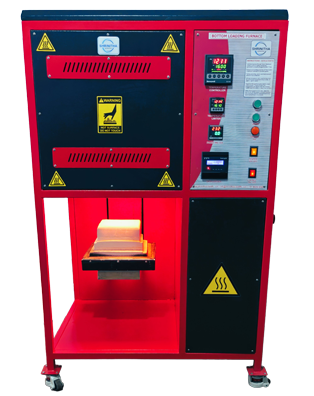
What is a Rising Hearth Furnace?
A Rising Hearth Furnace is a high-temperature chamber furnace in which the furnace hearth moves vertically upward to bring the load into the heated chamber. Unlike a conventional front-loading furnace, the loading platform is positioned below the chamber during loading and rises into the heating zone during operation.
This bottom-loading arrangement provides easy access to the hearth and can be particularly useful when handling crucibles, ceramic components, research samples, and other laboratory loads.
The furnace can be designed with high-temperature heating elements, refractory insulation, programmable temperature control, and suitable safety mechanisms according to the required application.
1700°C Premium Bottom Loading Furnace
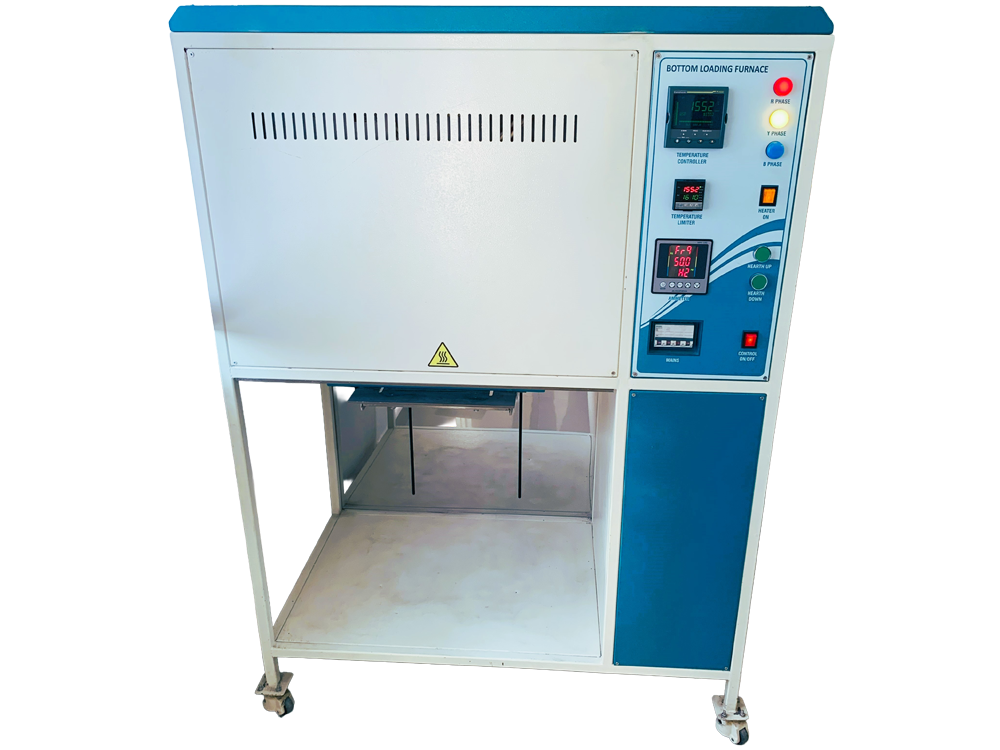
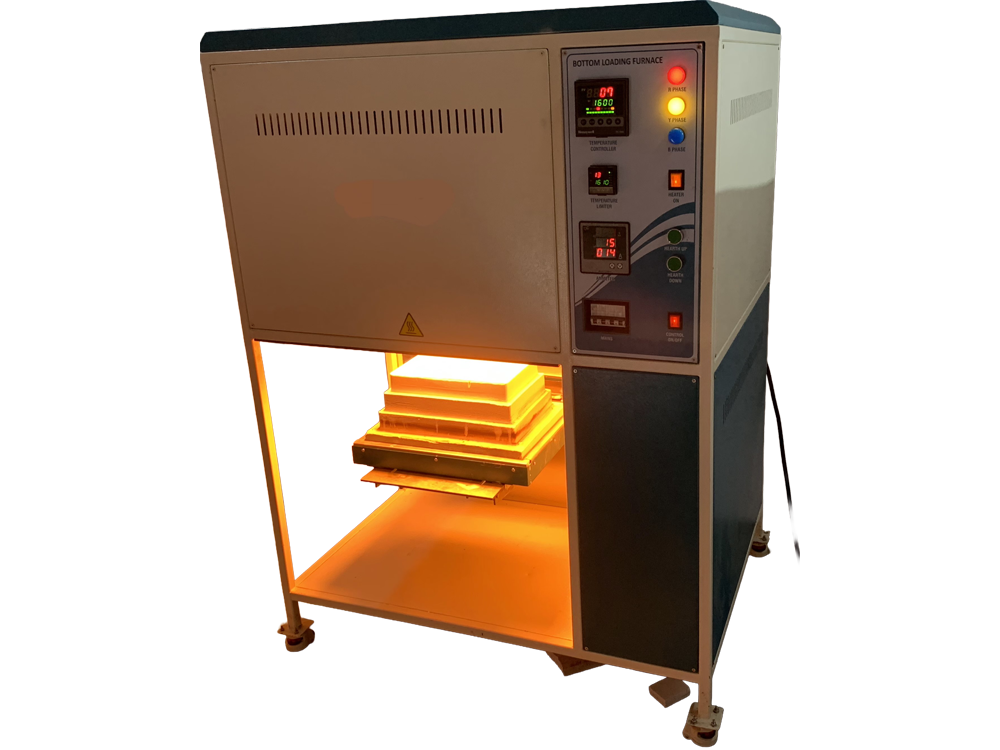
1800°C Premium Bottom Loading Furnace
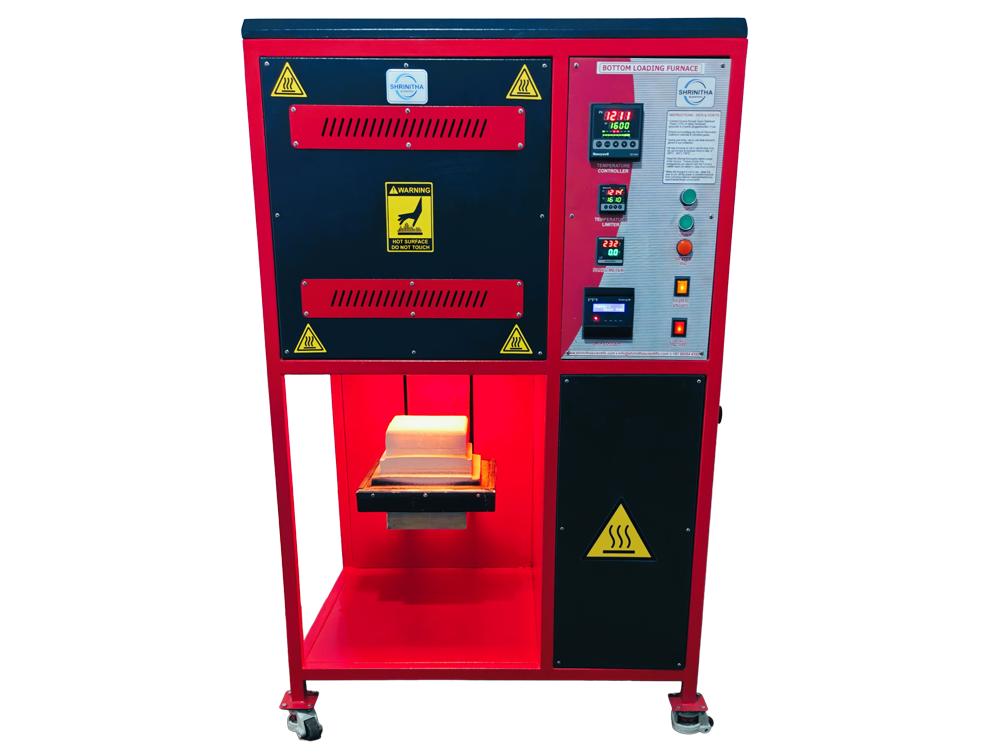

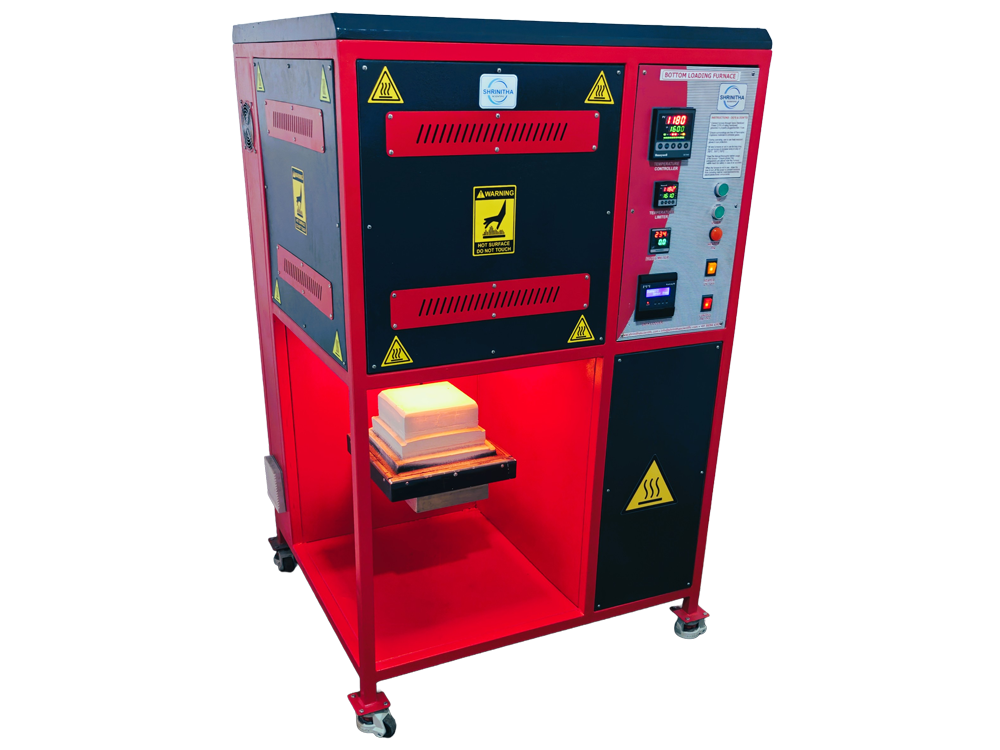
Key Features of Laboratory Rising Hearth Furnace
- High-temperature operation from 1700°C to 1800°C.
- Bottom-loading design with electrically operated lifting hearth.
- Convenient loading and unloading of samples and crucibles.
- Vertical movement of the hearth into the heated chamber.
- High-temperature heating elements suitable for the specified furnace rating.
- High-quality refractory and thermal insulation.
- Digital PID temperature control system.
- Programmable temperature profiles for controlled heating cycles.
- Over-temperature protection for safer operation.
- Safety interlock arrangement for the lifting mechanism, where specified.
- Suitable for laboratory-scale high-temperature material processing.
- Customizable chamber dimensions and hearth size.
- Optional controlled-atmosphere arrangements for suitable applications.
Technical Specifications
| Parameter | Specification |
|---|---|
| Product Name | Laboratory Rising Hearth Furnace |
| Also Known As | Bottom-Loading Furnace / Lifting Hearth Furnace / Elevator Hearth Furnace |
| Manufacturer | Shrinitha Scientific |
| Maximum Temperature | 1700°C to 1800°C |
| Heating System | Electric |
| Heating Elements | High-temperature elements selected according to model |
| Temperature Controller | Digital PID / Programmable Controller |
| Hearth Movement | Motorized / Electrically Operated Lifting System |
| Loading Arrangement | Bottom Loading |
| Furnace Chamber | High-temperature insulated chamber |
| Insulation | High-temperature ceramic/refractory insulation |
| Atmosphere | Air / Suitable Controlled Atmosphere, subject to configuration |
| Over-Temperature Protection | Available |
| Safety Interlock | Available according to lifting-system configuration |
| Chamber Capacity | As per customer requirement |
| Hearth Dimensions | Customizable |
| Power Supply | As per furnace model |
| Customization | Available |
Note: Exact chamber dimensions, hearth capacity, heating element selection, temperature uniformity, lifting mechanism, power rating, and continuous operating temperature should be finalized according to the selected furnace model and application.
How Does a Rising Hearth Furnace Work?
The operating principle is straightforward:
1. Loading Position
The hearth is lowered below the main heating chamber, providing convenient access for placing the sample, crucible, or workpiece.
2. Sample Placement
The material to be processed is positioned on the furnace hearth using suitable trays, crucibles, or fixtures.
3. Hearth Lifting
The electrically operated lifting mechanism raises the hearth into the insulated heating chamber.
4. Heating Cycle
Once the hearth reaches its operating position, the furnace heats the load according to the programmed temperature cycle.
5. Holding Period
The temperature can be maintained for the required duration according to the laboratory process.
6. Hearth Lowering
After the heating cycle, the hearth can be lowered to provide access to the processed material, subject to the furnace's operating procedure and safety conditions.
This elevator-hearth arrangement is a recognized design approach for bottom-loading high-temperature furnaces and is used to simplify loading while allowing the load to be positioned centrally within the heated chamber.
Applications of Laboratory Rising Hearth Furnace
Shrinitha Scientific Rising Hearth Furnaces are suitable for a wide range of high-temperature laboratory and research applications.
Ceramic Sintering
Used for high-temperature sintering and thermal processing of suitable advanced ceramic materials.
Material Research
Suitable for investigating the thermal behavior and processing characteristics of advanced materials.
Glass Processing
Can be configured for selected high-temperature glass melting and thermal treatment applications.
Heat Treatment
Suitable for controlled heating and thermal treatment of compatible materials.
Calcination
Used for thermal decomposition and processing of suitable inorganic materials.
Metallurgical Research
Useful for laboratory-scale studies involving high-temperature treatment of metals and related materials.
Powder Processing
Suitable for selected powder-based material processing and high-temperature studies.
Refractory Material Research
Can be used for evaluating suitable refractory and high-temperature materials.
Advanced Material Development
Suitable for research involving ceramics, composites, and other high-temperature materials.
Academic Research
Useful for universities, technical institutions, and research laboratories conducting high-temperature experiments.
High-temperature bottom-loading furnaces are commonly associated with applications such as advanced ceramic sintering, glass processing, material testing, and modified-atmosphere work.
Advantages of Laboratory Rising Hearth Furnace
Easy Bottom Loading
The lowered hearth provides direct access to the loading platform, making sample and crucible placement more convenient than reaching into a deep heated chamber.
Suitable for Heavy or Delicate Loads
The lifting platform can provide a stable loading arrangement for compatible laboratory samples, crucibles, and fixtures.
Convenient Sample Handling
The vertical hearth movement makes loading and unloading straightforward and can reduce the need to reach into the heated furnace chamber.
High-Temperature Capability
With temperature options from 1700°C to 1800°C, the furnace is suitable for specialized high-temperature research and processing applications.
Controlled Heating
A programmable temperature controller can be used to establish heating rates, temperature holding periods, and defined thermal cycles.
Flexible Furnace Configuration
The chamber volume, hearth dimensions, heating arrangement, controller, and optional accessories can be selected according to the application.
Enhanced Operational Safety
The lifting mechanism can keep the operator away from the main radiant heating zone during normal loading and unloading operations. Suitable interlocks and over-temperature protection can further support safe operation.
Heating Elements for 1700°C to 1800°C Furnaces
For furnace designs operating at 1700°C and 1800°C, high-temperature heating elements such as Molybdenum Disilicide (MoSi2) may be selected according to the furnace design and process requirements. Manufacturers of comparable high-temperature bottom-loading furnaces use MoSi2 elements for these temperature ranges.
The final heating-element selection should consider:
- Maximum furnace temperature
- Required continuous operating temperature
- Chamber dimensions
- Heating rate
- Operating atmosphere
- Sample material
- Thermal cycling requirements
Optional Features & Accessories
Depending on the required configuration, Shrinitha Scientific can provide suitable options such as:
- Programmable temperature controller
- Multi-segment temperature programming
- Independent over-temperature protection
- Motorized hearth lifting mechanism
- Safety interlock system
- High-temperature crucibles
- Ceramic hearth plates
- Customized hearth dimensions
- Gas inlet and outlet arrangements
- Compatible gas flow control system
- Controlled-atmosphere configuration
- Temperature data logging
- Communication interface for process monitoring
- Customized chamber dimensions
The availability and suitability of each option depend on the furnace design and intended application.
Laboratory Rising Hearth Furnace for Ceramic Sintering
Rising Hearth Furnaces are particularly useful when ceramic components or other laboratory loads need to be positioned conveniently within a high-temperature chamber. The bottom-loading arrangement allows the sample to be placed on the hearth before the hearth is raised into the heating zone.
For high-performance ceramic research, the furnace can be configured with suitable heating elements, insulation, temperature control, and atmosphere arrangements according to the material being processed.
Why Choose Shrinitha Scientific?
High-Temperature Expertise:
We manufacture laboratory furnaces designed for demanding high-temperature applications up to 1800°C.
Application-Based Configuration:
Furnace construction can be adapted according to chamber size, hearth dimensions, temperature requirement, and intended process.
Research-Oriented Design:
Our furnaces are developed for laboratories, research institutions, universities, and industrial R&D facilities.
Controlled Heating:
Programmable temperature control supports defined thermal cycles for repeatable laboratory processes.
Customized Solutions:
We can discuss customized configurations for specific sample dimensions and experimental requirements.
Manufacturer & Exporter in India:
Shrinitha Scientific serves customers requiring specialized laboratory heating equipment in India and international markets.
Rising Hearth Furnace Manufacturer & Exporter in India
Shrinitha Scientific is a manufacturer and exporter of Laboratory Rising Hearth Furnaces in India, offering high-temperature furnace solutions from 1700°C to 1800°C.
Our Rising Hearth Furnaces, also known as Bottom-Loading Furnaces or Lifting Hearth Furnaces, are designed for applications where convenient loading, controlled high-temperature heating, and accessible sample handling are important.
From ceramic sintering and material research to calcination, heat treatment, glass processing, and advanced laboratory applications, our furnaces can be configured according to the specific requirements of the process.
Contact Shrinitha Scientific to discuss your required temperature, chamber capacity, hearth dimensions, heating cycle, and application. We can provide a suitable technical configuration and quotation based on your laboratory requirements.
Frequently Asked Questions
1. What is a Rising Hearth Furnace?
A Rising Hearth Furnace is a high-temperature furnace with a movable hearth that rises vertically into the heating chamber. It is also commonly described as a bottom-loading, lifting-hearth, or elevator-hearth furnace.
2. What is the temperature range of Shrinitha Scientific Rising Hearth Furnaces?
Shrinitha Scientific manufactures Rising Hearth Furnaces with temperature capabilities from 1700°C to 1800°C, depending on the selected configuration.
3. What is the main advantage of a bottom-loading furnace?
The lowered hearth provides convenient access for placing and removing samples or crucibles. The load is then lifted into the heated chamber for processing.
4. What are Rising Hearth Furnaces used for?
They can be used for ceramic sintering, calcination, heat treatment, material research, glass processing, refractory research, and other compatible high-temperature laboratory applications.
5. Which heating elements are suitable for 1800°C operation?
High-temperature elements such as MoSi2 may be used in suitable 1700°C–1800°C furnace designs. The final selection depends on the furnace construction and process requirements.
6. Can the Rising Hearth Furnace be customized?
Yes. Shrinitha Scientific can discuss customization of chamber size, hearth dimensions, heating configuration, temperature controller, lifting arrangement, and suitable accessories.
7. Can controlled-atmosphere operation be provided?
Selected furnace configurations can incorporate compatible gas inlet and outlet arrangements for controlled-atmosphere applications. The complete system must be designed according to the required process gas and operating conditions.
8. Is the furnace suitable for laboratory research?
Yes. Rising Hearth Furnaces are suitable for research laboratories, universities, ceramic research facilities, material science laboratories, and industrial R&D departments requiring high-temperature processing.