- PH: +91 8828443924
- Email: Response@ShrinithaFurnace.Com

Rocking Tube Furnace Manufacturer & Exporter in India
Rocking Tube Furnace – 1100°C to 1400°C
Srinitha Scientific is a manufacturer and exporter of high-performance Rocking Tube Furnaces in India, designed to meet the thermal processing requirements of laboratories, research institutions, universities, and industrial R&D facilities. Our Rocking Tube Furnaces operate at temperatures ranging from 1100°C to 1400°C and are engineered for controlled heating, material treatment, and advanced experimental applications.
A Rocking Tube Furnace is a specialized laboratory heating system that combines high-temperature processing with controlled rocking or oscillating movement. This movement helps redistribute the sample during heating, improving contact between the material and the heated environment. It is particularly useful for research involving powders, granular materials, chemical compounds, and other samples requiring consistent thermal exposure.
Srinitha Scientific offers Rocking Tube Furnace solutions suitable for laboratory-scale material development, calcination, thermal treatment, catalyst research, and advanced material processing, with configurations tailored to specific experimental requirements.
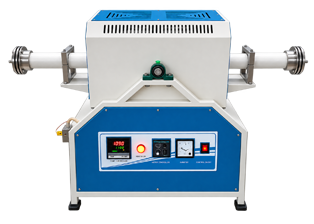
Key Features of Rocking Tube Furnace
- High-temperature operation: Available in configurations ranging from 1100°C to 1400°C.
- Controlled rocking mechanism: Provides motorized oscillating movement to support material redistribution during thermal processing.
- Uniform thermal exposure: Combines controlled heating with sample movement to help achieve consistent treatment.
- Programmable temperature control: Supports controlled heating cycles and temperature settings, depending on the selected controller.
- Efficient thermal insulation: Designed to minimize heat loss and support energy-efficient furnace operation.
- Robust construction: Engineered for reliable performance in laboratory and research environments.
- Flexible configuration: Tube dimensions, heating-zone arrangements, and rocking parameters can be selected according to application requirements.
- Research-oriented design: Suitable for laboratory experiments, material development, and specialized thermal processing.
Technical Specifications of Rocking Tube Furnace
| Parameter | Specification |
|---|---|
| Product Name | Rocking Tube Furnace |
| Manufacturer | Srinitha Scientific |
| Furnace Type | Laboratory Rocking Tube Furnace |
| Operating Temperature Range | 1100°C to 1400°C |
| Heating System | Electrical resistance heating |
| Tube Arrangement | Cylindrical working tube with rocking mechanism |
| Rocking Operation | Motorized rocking / oscillating movement |
| Temperature Controller | Digital or programmable controller, as per model |
| Heating Zones | Single-zone or customized configuration, subject to model |
| Working Tube Material | Selected according to operating temperature and process compatibility |
| Atmosphere Control | Optional gas-purging or controlled-atmosphere arrangement |
| Tube Dimensions | Customizable as per application |
| Power Supply | As per furnace model and electrical requirement |
| Customization | Available as per process and laboratory requirements |
Note: The above table describes general configuration options. Actual specifications, including maximum continuous operating temperature, tube material, heating-zone dimensions, rocking angle, oscillation frequency, power rating, and atmosphere compatibility, depend on the selected model and customer requirements.
Working Principle of Rocking Tube Furnace
A Rocking Tube Furnace operates by combining electrical heating with a controlled mechanical rocking movement. The sample is placed inside a suitable high-temperature-resistant working tube, which is positioned within the furnace's heated zone.
The heating elements generate the required temperature, while a temperature sensor and controller regulate the heating cycle. During operation, the rocking mechanism moves the tube or its designated assembly back and forth through a predetermined motion.
This movement helps redistribute loose or granular samples, allowing different portions of the material to experience the heated environment. In suitable applications, the combination of controlled heating and rocking motion can improve material exposure and support more consistent thermal processing.
Depending on the selected configuration, the furnace can also be equipped with gas inlet and outlet arrangements for controlled-atmosphere experiments.
Types of Rocking Tube Furnace
1. Standard Laboratory Rocking Tube Furnace
Designed for routine laboratory thermal processing and research applications. It combines a high-temperature heating system with controlled rocking movement for processing small quantities of materials.
2. Programmable Rocking Tube Furnace
Equipped with a programmable temperature controller to manage heating stages, holding periods, and temperature cycles. Suitable for experiments requiring repeatable thermal schedules.
3. Controlled Atmosphere Rocking Tube Furnace
Available with suitable gas inlet and outlet connections for experiments requiring an inert or other compatible process atmosphere. Gas compatibility and operating conditions must be specified according to the application.
4. Customized Rocking Tube Furnace
Designed around specific laboratory requirements, including working tube dimensions, rocking mechanism, heating-zone arrangement, temperature range, and optional process accessories.
Applications of Rocking Tube Furnace
Rocking Tube Furnaces are used in laboratories and research facilities for thermal processing applications where controlled heating and sample movement are beneficial.
Material Science and Advanced Materials
Used for thermal treatment and experimental development of advanced materials, functional powders, and specialized inorganic compounds.
Powder Processing and Calcination
Suitable for laboratory-scale calcination and thermal treatment of compatible powder and granular samples. The rocking action helps redistribute material during heating.
Catalyst Research
Used for catalyst preparation, thermal activation, and research involving the heating of catalyst materials under specified process conditions.
Ceramic and Refractory Materials
Suitable for laboratory experiments involving ceramic powders, inorganic materials, and thermal treatment studies.
Battery and Energy Material Research
Can be configured for research involving selected battery-related materials, electrode powders, and energy-storage material development, subject to process and tube-material compatibility.
Chemical and Pharmaceutical Research
Used for specialized thermal experiments, material preparation, and controlled heating of compatible chemical substances in research environments.
Universities and Research Institutions
Suitable for academic laboratories, material science departments, and research centers conducting high-temperature experiments and thermal process studies.
Advantages of Rocking Tube Furnace
Improved Material Exposure
The rocking movement helps redistribute suitable samples during heating, allowing more consistent exposure to the heated environment.
Controlled Thermal Processing
The temperature control system supports defined heating and holding cycles, making the furnace suitable for structured laboratory experiments.
Enhanced Process Flexibility
Rocking parameters, working tube dimensions, and heating configurations can be selected according to the intended application and model.
Suitable for Research and Development
The furnace supports experimental work involving powder processing, catalyst preparation, material development, and high-temperature reactions.
Efficient Heating Arrangement
Thermal insulation and a properly designed heating chamber help reduce heat loss and support efficient furnace operation.
Customizable Design
The equipment can be configured to meet different laboratory requirements, including selected atmosphere-control accessories and specialized working tubes.
Optional Accessories and Customization
Depending on the furnace model and process requirements, the following options may be considered:
- Programmable digital temperature controller.
- Controlled-atmosphere gas inlet and outlet arrangement.
- Gas flow meters and compatible gas-control accessories.
- Vacuum-compatible arrangement, subject to engineering feasibility.
- Additional temperature measurement or monitoring provisions.
- Customized working tube dimensions and materials.
- Customized rocking angle, frequency, and motion control.
- Data logging or communication interface, where available.
- Supporting stand and installation accessories.
All optional accessories should be selected according to the intended operating temperature, sample characteristics, and process safety requirements.
Why Choose Srinitha Scientific?
Srinitha Scientific manufactures and exports laboratory Rocking Tube Furnaces designed for research, development, and specialized high-temperature applications.
Our focus is on providing thermal processing equipment with practical design, controlled heating, and application-oriented customization.
- Manufacturer and exporter of laboratory Rocking Tube Furnaces in India.
- Temperature configurations from 1100°C to 1400°C.
- Application-based equipment customization.
- Options for controlled heating and rocking operation.
- Solutions for educational institutions, laboratories, and industrial research facilities.
We work to understand individual process requirements and offer furnace configurations suitable for the intended laboratory application.
Contact Srinitha Scientific for Rocking Tube Furnace
Looking for a Rocking Tube Furnace for laboratory research, powder processing, calcination, or advanced material development?
Contact Srinitha Scientific to discuss your temperature requirements, sample characteristics, working tube dimensions, and process conditions. Our team can help identify a suitable furnace configuration for your application.
Frequently Asked Questions (FAQs)
1. What is a Rocking Tube Furnace?
A Rocking Tube Furnace is a high-temperature laboratory furnace that combines electrical heating with a rocking or oscillating mechanism. The movement helps redistribute samples during heating and is useful for selected powder-processing and material research applications.
2. What is the operating temperature of Srinitha Scientific Rocking Tube Furnace?
Srinitha Scientific manufactures Rocking Tube Furnaces with operating temperature configurations ranging from 1100°C to 1400°C. The suitable model depends on the required process temperature and working conditions.
3. What is the purpose of the rocking mechanism?
The rocking mechanism moves the tube or designated assembly back and forth during operation. This helps redistribute suitable materials and improves their exposure to the heated environment.
4. Which materials can be processed in a Rocking Tube Furnace?
Depending on the working tube and process configuration, the furnace can be used for compatible powders, granular materials, catalyst compounds, ceramic materials, and selected advanced materials. Material compatibility should be confirmed before operation.
5. Can a Rocking Tube Furnace be used for calcination?
Yes. A suitably configured Rocking Tube Furnace can be used for laboratory-scale calcination and thermal treatment of compatible materials, with temperature and atmosphere selected according to the process.
6. Is atmosphere control available?
Gas inlet and outlet arrangements can be offered as optional configurations for compatible controlled-atmosphere applications. The required gas type, flow conditions, and operating pressure should be specified before ordering.
7. Can the furnace be customized?
Yes. Customization may include working tube dimensions, rocking mechanism, heating-zone arrangement, temperature controller, and selected accessories, depending on the model and application.
8. Who manufactures Rocking Tube Furnaces in India?
Srinitha Scientific is a manufacturer and exporter of laboratory Rocking Tube Furnaces in India, offering high-temperature furnace solutions for research institutions, laboratories, universities, and industrial R&D applications.