- PH: +91 8828443924
- Email: Response@ShrinithaFurnace.Com

Hardening Furnace Manufacturer & Exporter in India
Industrial Hardening Furnace – Up to 1200°C
Srinitha Scientific is an Indian manufacturer and exporter of Industrial Hardening Furnaces, designed for the controlled heat treatment of steel, alloy steel, and other suitable metal components. Our Hardening Furnaces are capable of operating at temperatures up to 1200°C and are developed to support the thermal processing requirements of manufacturing industries, engineering workshops, and metalworking facilities.
A Hardening Furnace is an industrial heating system used to heat suitable metals to a specified temperature, maintain them for a required period, and facilitate the subsequent cooling or quenching process. In steel hardening, the appropriate heating and rapid cooling cycle can increase hardness and wear resistance, depending on the material composition and treatment parameters.
Srinitha Scientific offers furnace solutions for the heat treatment of tools, dies, shafts, gears, machine parts, and other compatible metal components. The equipment can be configured according to the required operating temperature, component dimensions, batch capacity, loading arrangement, and production requirements.
Our focus is on providing practical industrial furnace solutions that support controlled heating, reliable operation, and application-specific thermal processing.
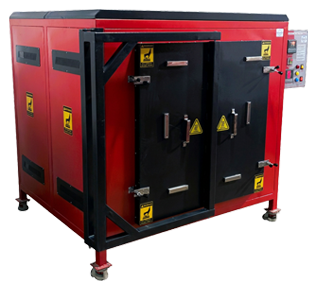
Industrial Hardening Furnace
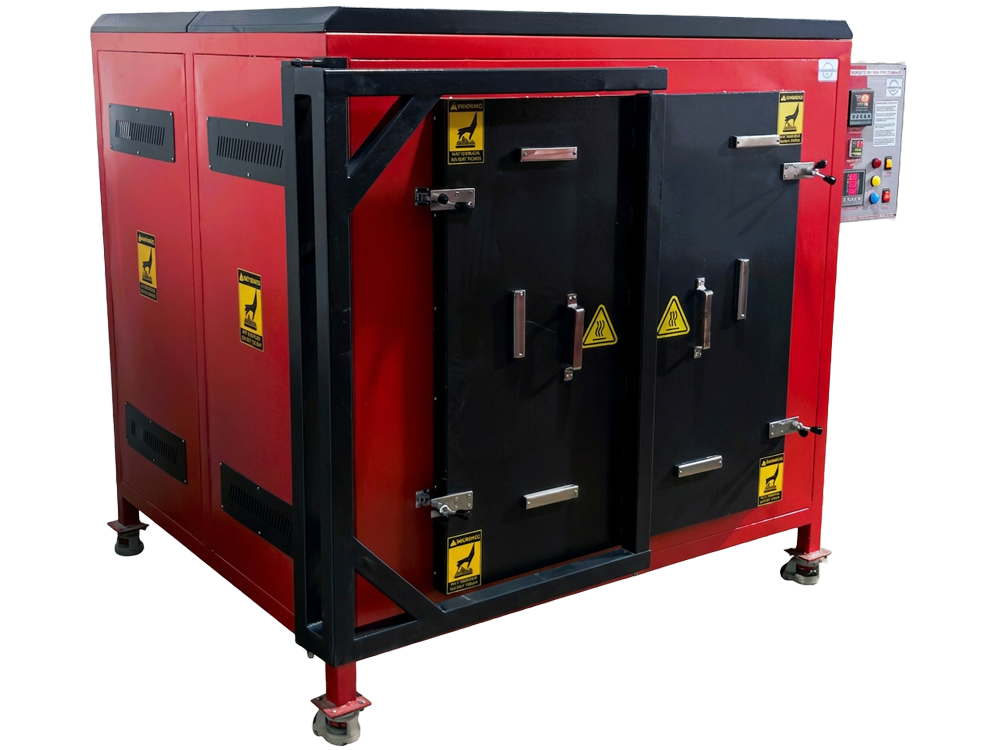
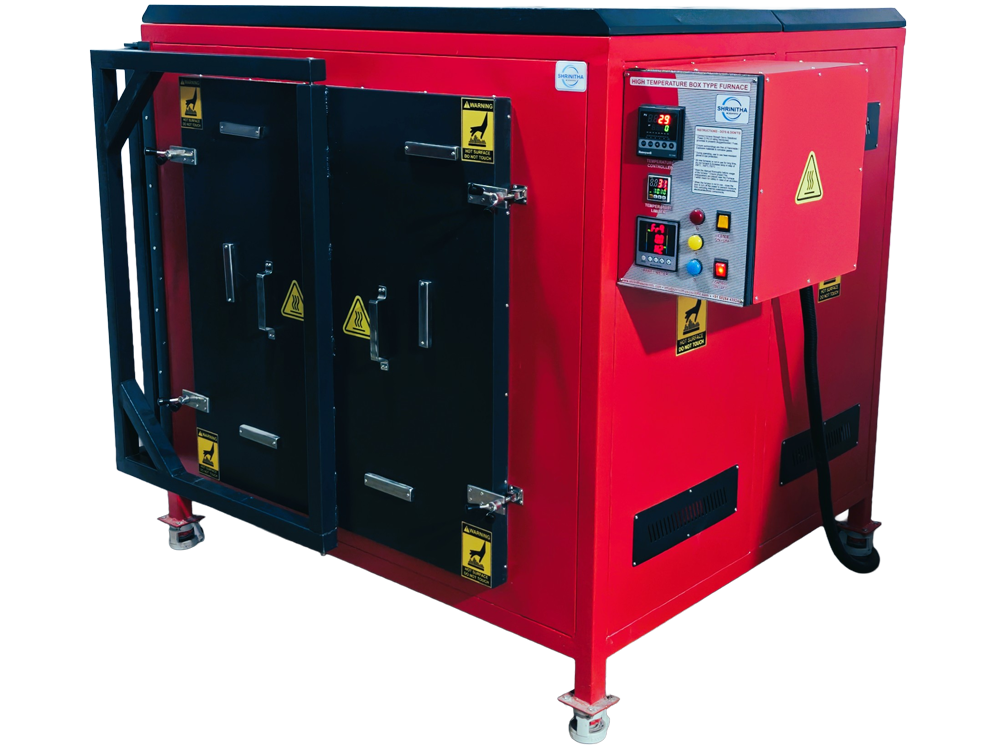
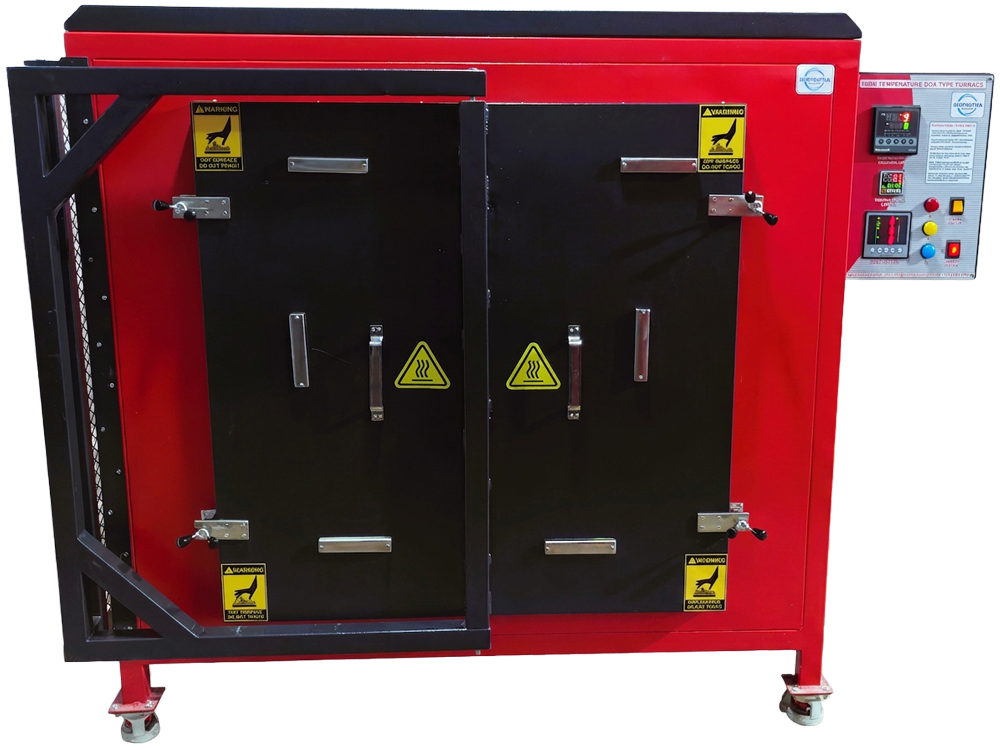
Key Features of Hardening Furnace
- High-temperature operation: Designed for operating temperatures up to 1200°C, depending on the selected model.
- Controlled heating: Supports regulated heating cycles suitable for different metal hardening requirements.
- Temperature regulation: Digital or programmable temperature control options, according to the furnace configuration.
- Thermal insulation: High-temperature insulation designed to minimize heat loss and support efficient furnace operation.
- Industrial construction: Suitable for repeated thermal processing in manufacturing and engineering environments.
- Flexible loading arrangement: Configurations can be selected according to component size, weight, and batch requirements.
- Versatile applications: Suitable for compatible hardening, heat treatment, and related thermal processing operations.
- Customized engineering: Chamber dimensions, heating capacity, and selected accessories can be designed around the intended application.
Technical Specifications of Hardening Furnace
| Parameter | Specification |
|---|---|
| Product Name | Industrial Hardening Furnace |
| Manufacturer | Srinitha Scientific |
| Furnace Type | Industrial Metal Hardening Furnace |
| Maximum Operating Temperature | Up to 1200°C |
| Heating System | Electrical resistance heating or other available configuration, as per model |
| Temperature Controller | Digital / programmable controller, depending on model |
| Temperature Sensor | Suitable high-temperature thermocouple |
| Heating Chamber | Enclosed chamber, with dimensions as per model |
| Heating Zones | Single-zone or multi-zone, depending on configuration |
| Loading Arrangement | Front-loading, top-loading, or other available design |
| Insulation | High-temperature thermal insulation |
| Quenching Arrangement | Separate or integrated arrangement, subject to design and availability |
| Atmosphere Control | Optional, subject to model and process requirements |
| Power Supply | As per furnace capacity and electrical requirements |
| Customization | Available according to application requirements |
Note: Actual specifications, including chamber dimensions, batch capacity, heating rate, temperature uniformity, power rating, quenching system, and atmosphere control, depend on the selected model. Confirm these details with the manufacturer before ordering.
Working Principle of Hardening Furnace
A Hardening Furnace works by applying a controlled heating cycle to suitable metal components, followed by an appropriate cooling or quenching process. In steel hardening, the treatment is selected to produce the desired metallurgical structure and improve hardness and wear resistance.
The general process involves the following stages:
1. Loading the Components
Metal components such as tools, shafts, gears, dies, and other compatible workpieces are placed inside the furnace chamber using a suitable loading arrangement.
2. Controlled Heating
The furnace raises the material temperature to the specified hardening temperature. The required temperature depends on the steel grade, carbon content, alloy composition, and component dimensions.
3. Soaking Period
The components are held at the required temperature for a predetermined duration. This allows the material to reach suitable thermal conditions throughout the workpiece, subject to its size and geometry.
4. Quenching or Rapid Cooling
After the heating and holding stages, the components are cooled using an appropriate quenching method. Depending on the material and process, this may involve oil, water, polymer solution, gas, or another specified cooling medium.
The cooling method must be selected according to the material grade, component geometry, and required mechanical properties.
5. Tempering, Where Required
Hardened steel components are often subjected to a subsequent tempering treatment to reduce brittleness and obtain a suitable balance of hardness, strength, and toughness.
The hardening cycle and associated quenching or tempering operations must be selected according to the applicable material specifications and process requirements.
Types of Hardening Furnace
Hardening Furnaces can be configured in different designs depending on component geometry, batch size, production volume, and the required heat treatment process.
1. Box Type Hardening Furnace
A Box Type Hardening Furnace features an enclosed heating chamber suitable for batch processing of metal components. Its rectangular chamber provides a practical arrangement for loading and heating different types of industrial parts.
It is suitable for applications involving tools, dies, machine components, small fabricated parts, and other compatible workpieces.
The chamber dimensions, door arrangement, and heating capacity can be selected according to the required batch size.
2. Chamber Type Hardening Furnace
A Chamber Type Hardening Furnace is designed for controlled heating of metal components within an insulated enclosure.
Depending on the model, it can be configured for hardening and other compatible thermal treatment operations. It is suitable for engineering workshops, manufacturing plants, and heat treatment facilities.
3. Pit Type Hardening Furnace
A Pit Type Hardening Furnace features a vertically arranged heating chamber and is suitable for selected components that require vertical loading.
It may be used for long shafts, rods, and other compatible workpieces where the vertical chamber arrangement provides practical loading and handling advantages.
The working dimensions and loading arrangement are selected according to the component geometry and treatment requirements.
4. Bogie Hearth Hardening Furnace
A Bogie Hearth Furnace uses a movable hearth or trolley to facilitate loading and unloading of heavy or bulky components.
It is suitable for larger metal parts, fabricated components, and selected industrial workpieces that require a substantial loading platform.
Bogie hearth configurations can be considered where component weight and dimensions make conventional chamber loading less practical.
5. Customized Hardening Furnace
Customized Hardening Furnaces are developed around specific manufacturing and thermal processing requirements.
Depending on the application, customization may include:
- Special chamber dimensions and loading capacity.
- Customized heating-zone arrangement.
- Programmable temperature control.
- Suitable loading fixtures and trays.
- Optional atmosphere-control provisions.
- Compatible quenching and handling arrangements.
The availability of each configuration depends on the required temperature, component specifications, and engineering feasibility.
Applications of Hardening Furnace
Industrial Hardening Furnaces are used in manufacturing industries where suitable metal components require improved hardness, strength, or wear resistance.
1. Automotive Components
Used for the heat treatment of compatible automotive components such as shafts, gears, pins, selected fasteners, and other steel parts requiring specified mechanical properties.
2. Tool and Die Manufacturing
Suitable for heat treatment of compatible cutting tools, dies, moulds, punches, and other tooling components manufactured from hardenable steel grades.
3. Gear and Shaft Hardening
Used for thermal processing of selected gears, shafts, and transmission components to achieve the required hardness and wear characteristics.
4. Engineering and Machine Components
Suitable for compatible machine parts, industrial equipment components, and fabricated metal products that require controlled hardening treatment.
5. Forging and Metalworking Industries
Used in the thermal processing of selected forged components and metalworking products, subject to material composition and required heat treatment specifications.
6. Manufacturing and Industrial Workshops
Suitable for batch heat treatment applications in industrial workshops, tool rooms, engineering plants, and metal-processing facilities.
7. Metallurgical Research and Development
Can be used for laboratory and industrial R&D involving hardening studies, thermal process development, and evaluation of suitable metal materials.
Advantages of Hardening Furnace
Improved Hardness and Wear Resistance
When used with an appropriate hardening and quenching process, the furnace supports the treatment of compatible materials to achieve the required hardness and wear resistance.
Controlled Heating Cycles
Temperature regulation allows the heating and holding stages to be managed according to the selected material and treatment requirements.
Versatile Component Processing
Suitable furnace configurations can accommodate different types of metal components, from small tooling parts to larger industrial workpieces.
Flexible Industrial Design
Chamber dimensions, loading arrangements, heating capacity, and selected accessories can be configured to suit individual production requirements.
Support for Repeatable Processing
A properly designed and operated furnace helps maintain consistent process conditions across batches when material preparation, loading, heating, and quenching parameters are controlled.
Integration with Heat Treatment Operations
Depending on the selected configuration, the furnace can be incorporated into a broader heat treatment workflow that includes quenching, tempering, and component handling.
Temperature Control and Safety Features
Reliable temperature control and safe operation are important for industrial hardening applications.
Depending on the selected model, Srinitha Scientific Hardening Furnaces can be configured with:
- Digital temperature indication and control.
- Programmable heating and soaking cycles.
- Suitable high-temperature thermocouples.
- Over-temperature protection provisions.
- Electrical control panel with appropriate operating controls.
- Door interlocks or other safety arrangements, where applicable.
Additional safety requirements depend on the furnace design, electrical configuration, loading method, and process conditions.
For processes involving quenching oils, combustible gases, or controlled atmospheres, appropriate process-specific safety systems must be selected.
Optional Accessories and Customization
The following options may be considered according to the application and furnace model:
- Programmable temperature controller.
- Additional temperature measurement points.
- Customized chamber dimensions.
- Loading trays, racks, and component fixtures.
- Multi-zone temperature control arrangements.
- Compatible controlled-atmosphere provisions.
- Suitable quenching tank or separate quenching arrangement.
- Component loading and unloading accessories.
- Data logging or process monitoring options, where available.
Quenching tanks, atmosphere-control systems, and specialized process equipment should be confirmed separately according to the required hardening cycle and material specifications.
Why Choose Srinitha Scientific?
Srinitha Scientific is an Indian manufacturer and exporter of industrial Hardening Furnaces, offering thermal processing equipment for manufacturing, engineering, and metalworking applications.
We focus on providing furnace configurations based on the actual requirements of industrial customers.
- Indian manufacturer and exporter of Hardening Furnaces.
- Operating temperature capability up to 1200°C.
- Application-based furnace customization.
- Options for chamber design, temperature control, and loading arrangements.
- Solutions for engineering, automotive, tooling, and metal-processing applications.
Our objective is to provide practical furnace solutions that support controlled heating and the thermal treatment requirements of industrial components.
Contact Srinitha Scientific for Hardening Furnace
Looking for an Industrial Hardening Furnace for tools, dies, gears, shafts, machine parts, or other metal components?
Contact Srinitha Scientific to discuss your material grade, required hardening temperature, component dimensions, batch capacity, and quenching requirements.
Our team can help identify a suitable furnace configuration according to your industrial heat treatment application.
Frequently Asked Questions (FAQs)
1. What is a Hardening Furnace?
A Hardening Furnace is an industrial heating system used to heat suitable metals to a specified temperature before an appropriate cooling or quenching process. The treatment is intended to improve hardness and other mechanical properties according to the material and process requirements.
2. What is the maximum operating temperature of Srinitha Scientific Hardening Furnace?
Srinitha Scientific manufactures Hardening Furnaces capable of operating at temperatures up to 1200°C. The suitable model depends on the material grade, required treatment temperature, and intended application.
3. Which materials can be hardened using a Hardening Furnace?
Suitable materials may include carbon steel, alloy steel, tool steel, and other hardenable metal grades. The correct hardening temperature and cooling method depend on the chemical composition and material specifications.
4. What is the difference between hardening and tempering?
Hardening involves heating a suitable material to a specified temperature followed by an appropriate cooling or quenching process to increase hardness.
Tempering is a subsequent heat treatment in which hardened steel is reheated under controlled conditions to reduce brittleness and achieve the desired balance of hardness and toughness.
5. Does a Hardening Furnace include a quenching tank?
Quenching arrangements depend on the selected model and equipment configuration. A quenching tank or separate quenching system may be offered or specified according to the required process. The inclusion of a quenching system should be confirmed when requesting a quotation.
6. Can the furnace chamber size be customized?
Yes. Chamber dimensions, loading arrangements, and capacity can be customized according to component dimensions, weight, batch size, and process requirements, subject to engineering feasibility.
7. Is a programmable temperature controller available?
Programmable temperature control can be provided depending on the selected model. It supports management of heating stages, soaking periods, and specified temperature settings.
8. Which industries use Hardening Furnaces?
Hardening Furnaces are used in automotive component manufacturing, tool and die production, engineering workshops, metalworking industries, forging facilities, and industrial manufacturing plants.
9. Is Srinitha Scientific a Hardening Furnace manufacturer in India?
Yes. Srinitha Scientific is an Indian manufacturer and exporter of industrial Hardening Furnaces, offering furnace solutions with operating temperatures up to 1200°C for compatible metal heat treatment applications.
Srinitha Scientific – Manufacturer & Exporter of Industrial Hardening Furnaces in India.