- PH: +91 8828443924
- Email: Response@ShrinithaFurnace.Com

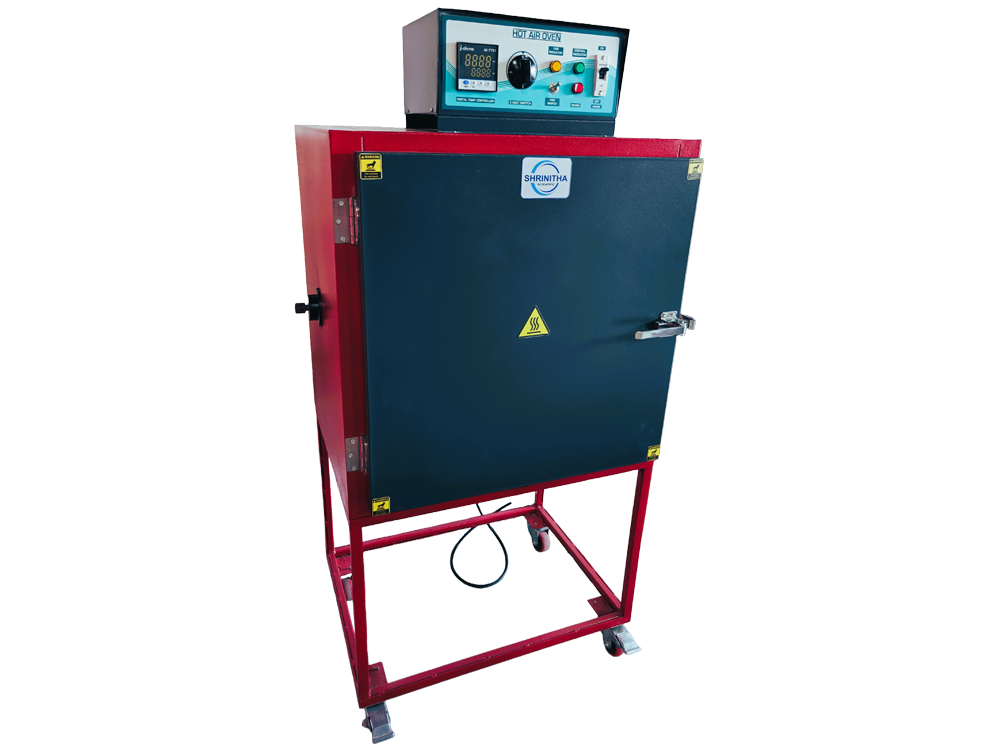
Industrial and Laboratory Hot Air Oven Manufacturer in India
Industrial and Laboratory Hot Air Oven – Ambient Temperature to 600°C
Shrinitha Scientific Company is an Indian manufacturer and exporter of Industrial and Laboratory Hot Air Ovens designed for controlled heating, drying, thermal processing, and material testing applications. With an operating temperature range from ambient temperature up to 600°C, our ovens can be configured to support diverse requirements across industrial production facilities, research laboratories, quality control departments, and scientific institutions.
Our hot air ovens are designed around the specific requirements of the application, including working temperature, chamber dimensions, material characteristics, heating duration, and process conditions. Whether used for routine laboratory drying or demanding high-temperature industrial operations, Shrinitha Scientific Company offers application-oriented oven solutions to support consistent and repeatable thermal processing.
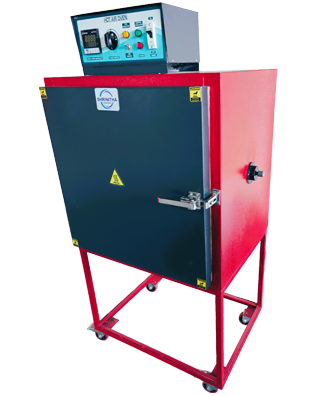
What Is a Hot Air Oven?
An Industrial and Laboratory Hot Air Oven is a temperature-controlled heating chamber that uses electrically generated heat to process materials under dry-heat conditions. The equipment is used for applications such as moisture removal, sample drying, preheating, thermal conditioning, curing, and heat exposure testing, depending on its design and operating range.
Laboratory models are generally selected for sample preparation, scientific studies, and controlled testing, while industrial models can be configured for larger components, production batches, and manufacturing processes. Shrinitha Scientific Company offers hot air oven solutions with temperatures extending up to 600°C, subject to the selected model and application requirements.
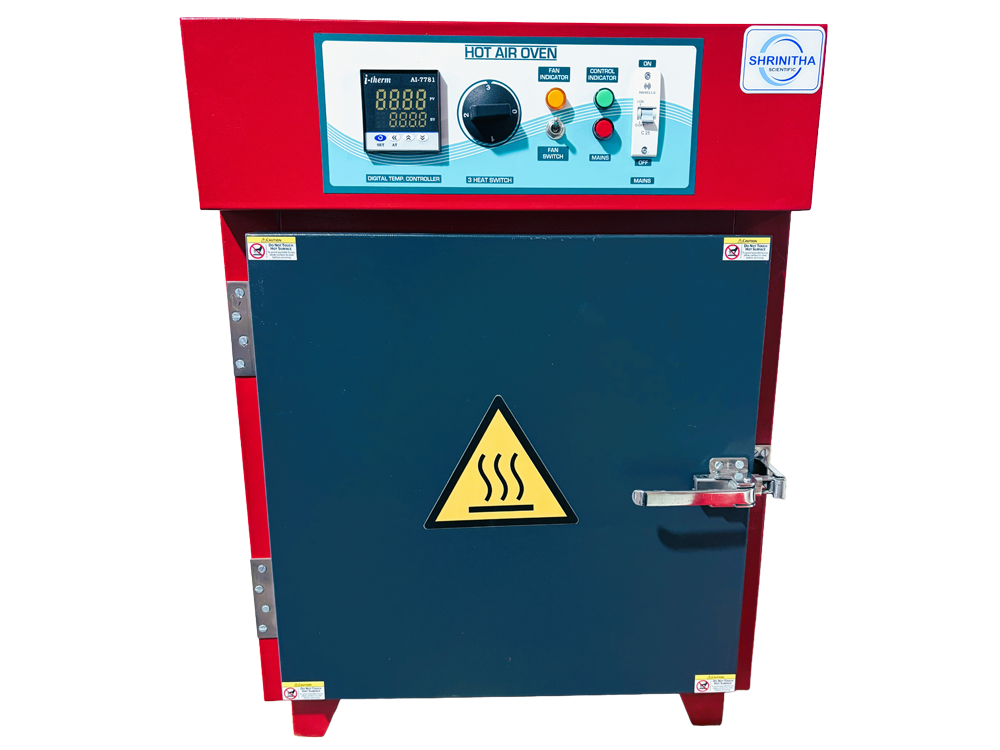
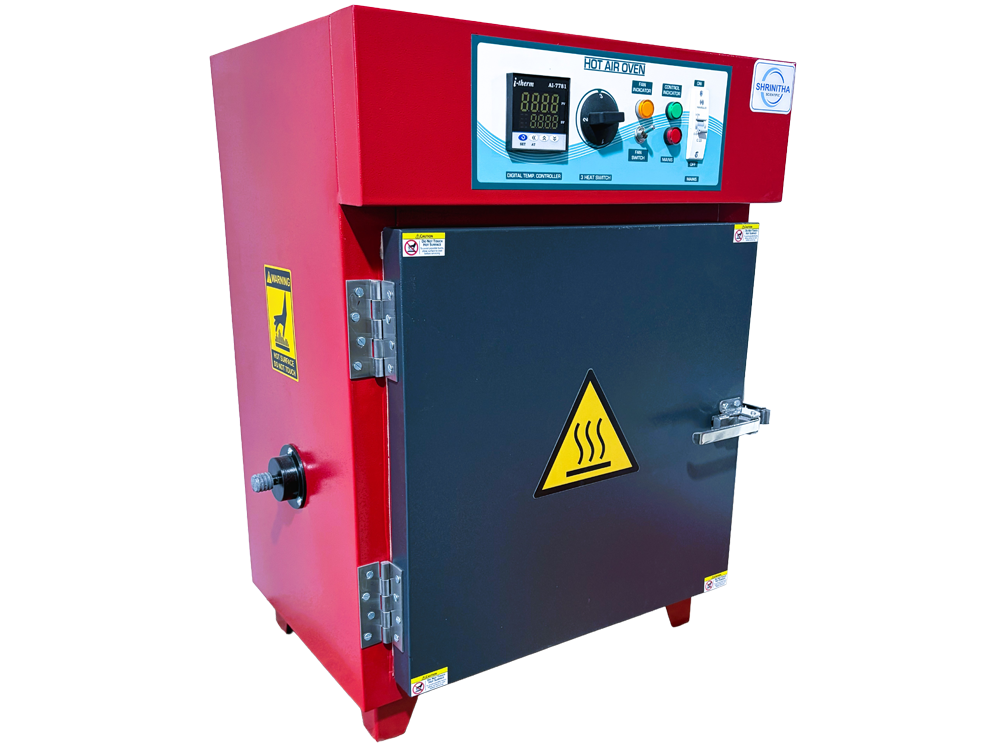
250°C Hot Air Oven
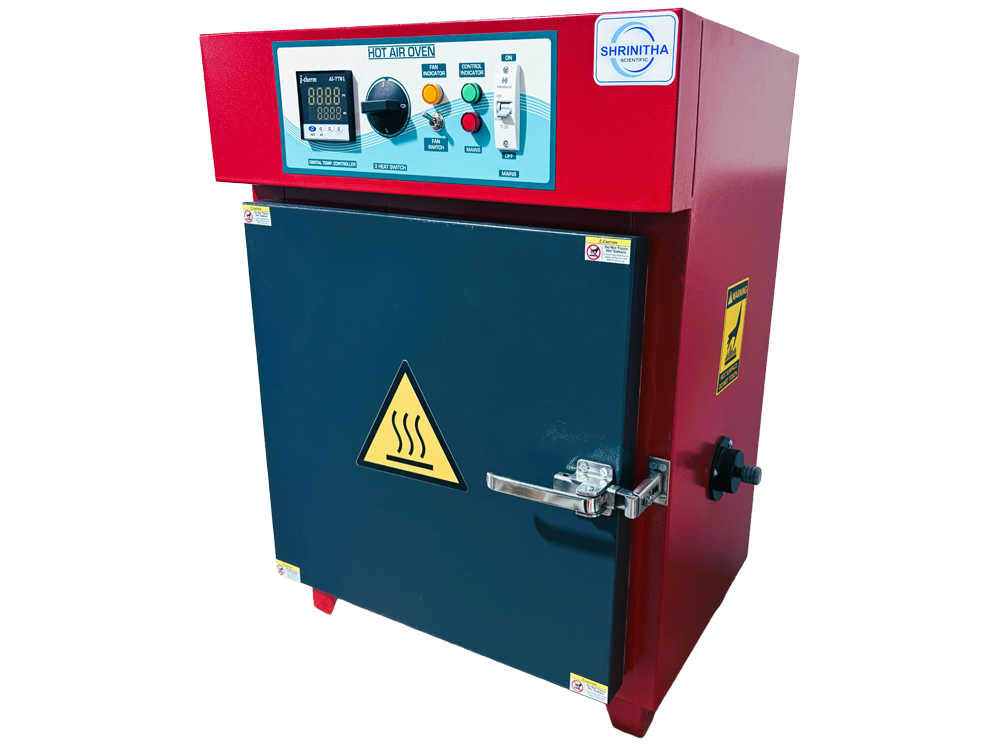
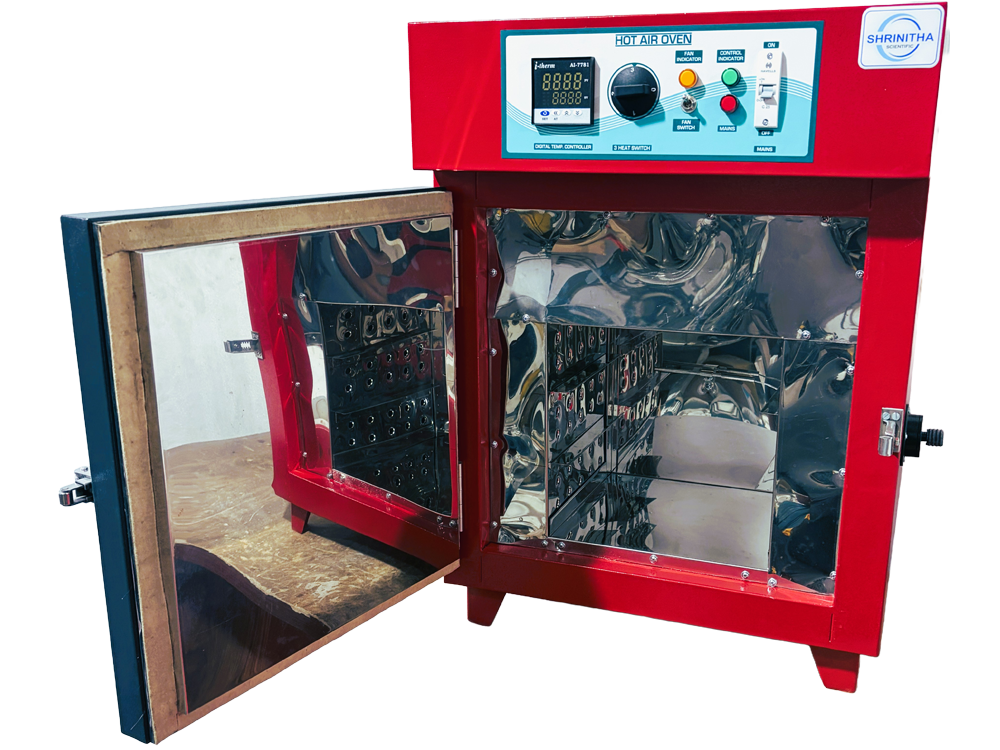
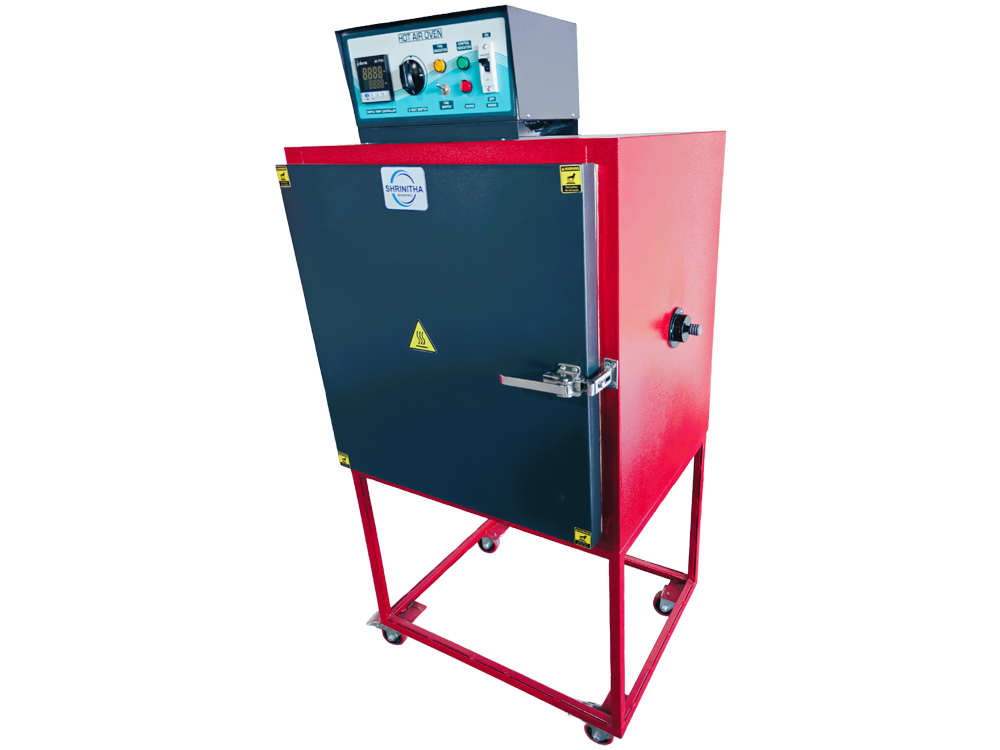
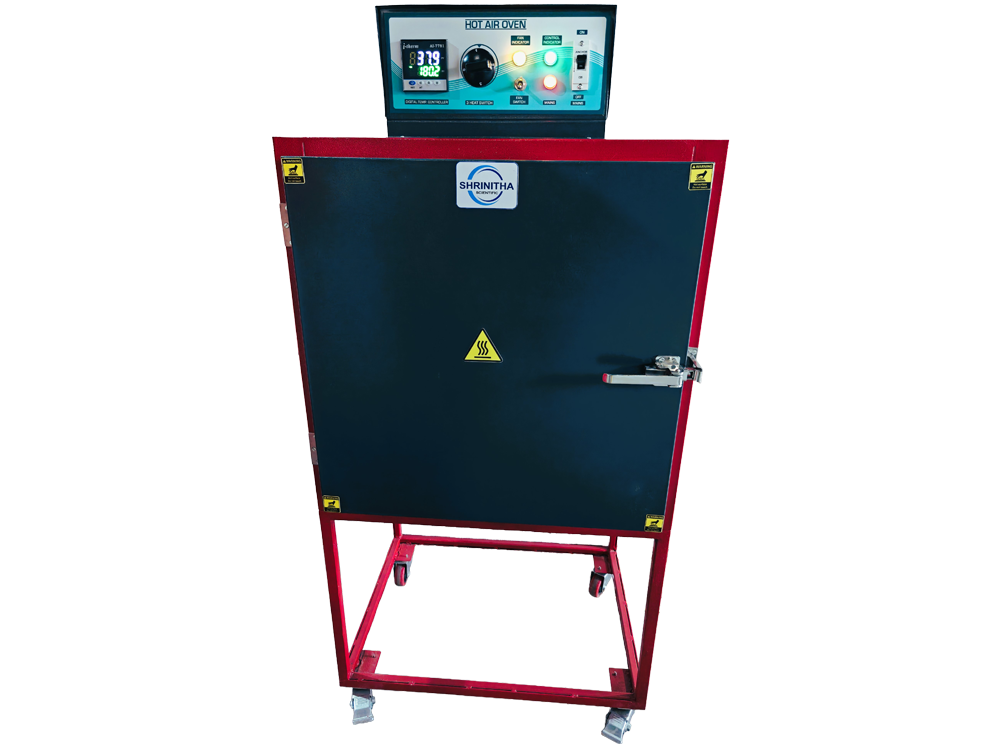
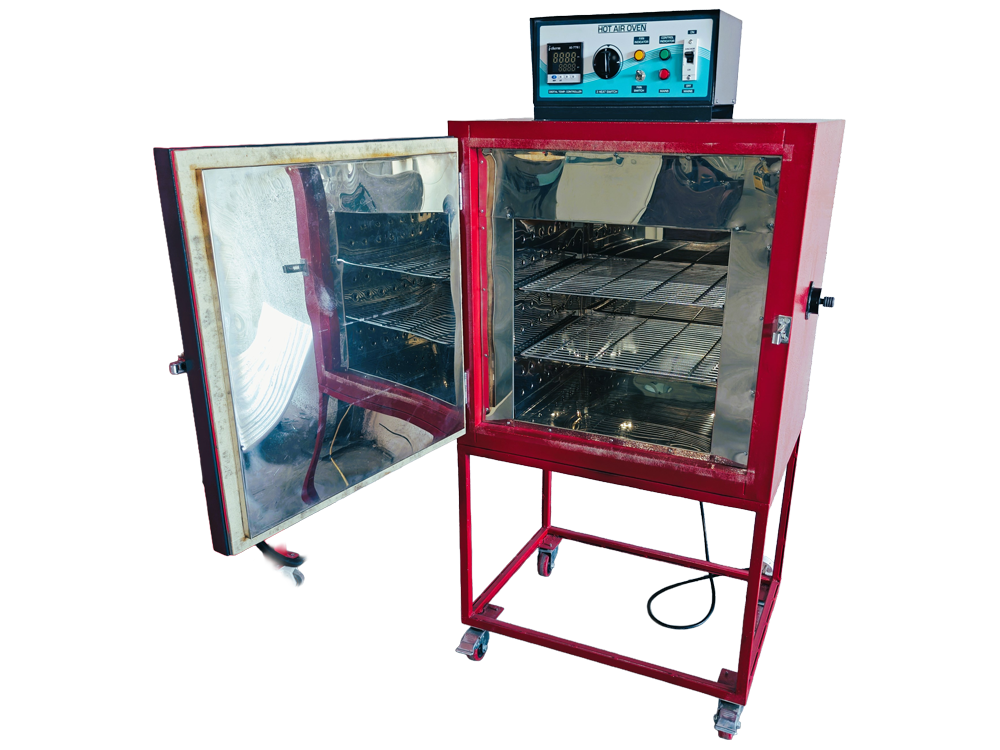
300°C Hot Air Oven
Key Features of Shrinitha Scientific Hot Air Ovens
- 1. Wide Temperature Range
Designed for applications requiring operation from ambient temperature up to 600°C. - 2. Controlled Heating
Temperature regulation helps maintain the selected operating conditions during the process. - 3. Application-Based Design
Chamber dimensions, capacity, and configuration can be selected according to the intended use. - 4. Thermal Insulation
Insulation is selected to reduce unwanted heat loss and support efficient operation. - 5. Flexible Chamber Configuration
Different chamber sizes and internal arrangements can be considered according to the load. - 6. Laboratory and Industrial Use
Suitable configurations are available for research, testing, production, and material-processing requirements. - 7. User-Friendly Controls
Temperature monitoring and control arrangements can be selected according to the model. - 8. Versatile Heating Applications
Supports drying, heating, preheating, curing, and thermal conditioning of compatible materials. - 9. Customised Engineering
Design parameters can be discussed according to the required temperature, load dimensions, and process cycle.
Specific features depend on the selected oven model and the final technical configuration.
Technical Specifications of Hot Air Oven
| Parameter | Specification |
|---|---|
| Product Name | Industrial and Laboratory Hot Air Oven |
| Manufacturer | Shrinitha Scientific Company |
| Country of Origin | India |
| Temperature Range | Ambient temperature to 600°C |
| Heating Method | Electrically heated |
| Temperature Control | As per model and application |
| Temperature Sensor | Selected according to operating temperature and configuration |
| Air Circulation | Natural or forced circulation, depending on design suitability |
| Chamber Capacity | Available as per application requirements |
| Chamber Dimensions | Customisable or model-dependent |
| Internal Chamber Material | Selected according to operating temperature and process requirements |
| Outer Body Construction | As per design specification |
| Thermal Insulation | Selected for the specified operating temperature |
| Shelves or Loading Arrangement | As per chamber design and load requirements |
| Electrical Supply | As per heater rating and model |
| Application | Drying, heating, thermal conditioning, curing, and material testing |
| Installation | As per project requirements |
Technical note: The above table provides a general configuration overview. Chamber size, temperature uniformity, control accuracy, heater rating, construction materials, and other performance parameters should be confirmed against the specific model before ordering.
Working Principle of a Hot Air Oven
A hot air oven operates by converting electrical energy into heat and transferring that heat to the material placed inside the chamber. The heating system raises the chamber temperature, while the control system monitors and regulates the process according to the selected set point.
The general operating sequence is as follows:
Step 1: Loading the Material
The samples, components, or materials are placed inside the chamber using the designated trays, shelves, or loading arrangement.
Step 2: Setting the Temperature
The operator selects the required temperature and process duration according to the application.
Step 3: Heat Generation
Electrical heating elements generate the heat required to raise the chamber temperature.
Step 4: Heat Distribution
Heat is transferred through the chamber by natural convection, forced air circulation, or the heating arrangement used in the selected design.
Step 5: Temperature Regulation
The temperature sensing and control system monitors the chamber conditions and regulates the heating process.
Step 6: Completion and Cooling
Once the specified cycle is completed, the material is allowed to cool appropriately before unloading, following the applicable operating procedure.
The precise heating arrangement and air circulation method depend on the oven design. For processes requiring defined temperature uniformity or repeatability, the selected model should be evaluated against the actual load and process requirements.
Types of Hot Air Ovens
Shrinitha Scientific Company can help identify a suitable oven configuration according to the intended application, required temperature, chamber size, and operating conditions.
1. Laboratory Hot Air Oven
Designed for laboratory activities such as sample drying, moisture removal, heating, and material conditioning. Chamber capacity and control arrangements can be selected according to the laboratory's requirements.
2. Industrial Hot Air Oven
Intended for manufacturing and industrial processing applications involving components, materials, or production batches. The chamber and heating capacity are determined by the load size, required temperature, and process duration.
3. High-Temperature Hot Air Oven
Configured for applications requiring elevated operating temperatures, with models available up to 600°C. High-temperature construction, insulation, heating elements, sensors, and internal components must be selected for the intended operating conditions.
4. Forced-Air Circulation Oven
Uses a fan-assisted airflow arrangement to distribute heated air through the chamber. It may be suitable when the process benefits from active air movement, provided the material, temperature, and chamber design are compatible.
5. Natural-Convection Oven
Uses natural movement of heated air within the chamber. This arrangement may suit applications where fan-driven airflow is unnecessary or unsuitable.
6. Customised Hot Air Oven
Developed around specific requirements such as non-standard chamber dimensions, special loading arrangements, process temperature, material compatibility, and production workflow.
Availability of these configurations should be confirmed with Shrinitha Scientific Company based on the required operating temperature and application.
Applications of Hot Air Ovens
Hot air ovens can serve a broad range of applications when the material and process are compatible with the selected temperature and heating method.
Laboratory and Research Applications
- Drying laboratory samples and suitable materials.
- Removing moisture from compatible specimens.
- Preparing samples for analytical and physical testing.
- Conducting controlled thermal conditioning experiments.
- Supporting research and development activities.
Pharmaceutical and Chemical Applications
- Drying suitable chemical materials and laboratory containers.
- Heating compatible samples during research and development.
- Supporting controlled thermal processing in laboratory environments.
- Conditioning materials before subsequent testing or processing.
Material compatibility, chemical hazards, and applicable process procedures must be assessed before heating chemicals or pharmaceutical materials.
Industrial Manufacturing Applications
- Preheating metal components before subsequent operations.
- Heating compatible manufactured parts.
- Thermal conditioning of selected industrial materials.
- Supporting suitable curing and drying processes.
- Conducting elevated-temperature exposure tests.
Material Testing and Quality Control
- Evaluating the response of compatible materials to heat.
- Preparing specimens for laboratory testing.
- Conducting controlled drying and conditioning cycles.
- Supporting product development and quality assessment procedures.
Educational and Institutional Laboratories
- Performing supervised experiments involving heat and material behaviour.
- Preparing laboratory specimens.
- Supporting engineering, chemistry, materials science, and industrial research activities.
High-Temperature Processing
For suitable materials and applications, ovens designed for operation up to 600°C can support specialised thermal processing. The process must be assessed for temperature compatibility, ventilation, material stability, and the oven's rated operating conditions.
Important Consideration for Dry-Heat Sterilisation: Hot air ovens are sometimes used for dry-heat sterilisation of suitable glassware and metal items. However, not every oven rated up to 600°C is automatically suitable for validated sterilisation. Sterilisation requires an appropriate, validated temperature-time cycle, compatible materials, and suitable monitoring procedures. The required operating conditions must be established for the specific application.
Advantages of Industrial and Laboratory Hot Air Ovens
- 1. Broad Operating Temperature CapabilityA temperature range extending up to 600°C supports applications that require more than routine low-temperature drying, subject to the model's rated conditions.
- 2. Versatile Process ApplicationsThe same general equipment category can serve drying, preheating, thermal conditioning, and testing applications when correctly configured.
- 3. Controlled Heating ConditionsA suitable temperature control system helps operators maintain the selected process temperature and achieve repeatable operating conditions.
- 4. Adaptable Chamber DesignChamber size, internal loading arrangements, and other design parameters can be chosen to suit the dimensions and quantity of the material being processed.
- 5. Suitable for Laboratory and Production EnvironmentsDifferent configurations can be selected for small laboratory samples or larger industrial components and batches.
- 6. Dry-Heat ProcessingThe equipment uses heated air rather than introducing steam into the chamber, making it useful for compatible processes where dry heating is required.
- 7. Application-Specific EngineeringSelecting the correct heating elements, insulation, sensors, and chamber construction helps align the equipment with the intended working conditions.
- 8. Support for Testing and DevelopmentControlled thermal exposure can assist laboratories and manufacturers in sample preparation, process development, and material evaluation.
Why Choose Shrinitha Scientific Company?
Shrinitha Scientific Company manufactures and exports industrial and laboratory heating equipment for a range of scientific and manufacturing applications. Our approach focuses on matching the oven configuration to the actual process rather than treating every heating requirement as identical.
Reasons to consider Shrinitha Scientific Company include:
- Industrial and Laboratory Expertise: Equipment solutions for scientific, research, and manufacturing environments.
- Wide Temperature Capability: Hot air oven configurations extending from ambient temperature to 600°C.
- Application-Oriented Selection: Consideration of operating temperature, material type, load dimensions, and process duration.
- Configurable Design: Options can be discussed according to chamber capacity and process requirements.
- Manufacturing and Export Support: Serving customers seeking industrial and laboratory heating equipment.
- Technical Requirement Assessment: Assistance in defining the important specifications for the intended application.
Contact Shrinitha Scientific Company with your required temperature, chamber dimensions, material details, and process information to discuss a suitable hot air oven configuration.
Frequently Asked Questions (FAQs)
Q1. What is an Industrial and Laboratory Hot Air Oven used for?
It is used for controlled heating, drying, moisture removal, thermal conditioning, and suitable material-testing applications. Its exact use depends on the design, temperature rating, and material being processed.
Q2. What is the maximum operating temperature of Shrinitha Scientific Hot Air Ovens?
The stated operating range extends from ambient temperature up to 600°C. The maximum temperature available for a particular model should be confirmed during technical selection.
Q3. Can the same hot air oven be used for industrial and laboratory applications?
The general technology serves both environments, but the appropriate chamber size, control system, heating capacity, and construction can differ. The equipment should be selected for its intended application.
Q4. Are hot air ovens suitable for drying materials?
Yes. Hot air ovens are commonly used for drying compatible materials and removing moisture under controlled heating conditions. The temperature and duration depend on the material and the required outcome.
Q5. Can a hot air oven be used for curing?
It can be used for suitable curing processes when the required temperature profile, airflow, chamber design, and material compatibility are established.
Q6. Does Shrinitha Scientific Company provide different chamber sizes?
Chamber dimensions and capacity can be discussed according to the application and required load. Available standard sizes and customisation options should be confirmed with the company.
Q7. How is temperature controlled inside a hot air oven?
A temperature sensor monitors chamber conditions and works with the selected controller to regulate the heating system. The control arrangement and performance depend on the model.
Q8. Is forced-air circulation necessary?
Not for every application. Forced circulation can assist heat distribution, while natural convection may be appropriate for other processes. The choice depends on the load, airflow sensitivity, temperature requirements, and oven design.
Q9. What information is required to select the right hot air oven?
The main details include the required operating temperature, material to be heated, chamber dimensions, load weight, batch quantity, process duration, airflow requirements, and available electrical supply.
Q10. Can a hot air oven operating up to 600°C sterilise laboratory equipment?
The maximum temperature alone does not establish sterilisation suitability. A suitable design and validated cycle are necessary, and the items being processed must be compatible with the specified dry-heat conditions.
Get a Quote for an Industrial or Laboratory Hot Air Oven
Looking for an Industrial or Laboratory Hot Air Oven for your research facility, testing laboratory, or manufacturing unit? Shrinitha Scientific Company can help you evaluate the appropriate configuration for your application.
Share your required temperature range, chamber size, material details, load capacity, and intended process to discuss a suitable solution.
Shrinitha Scientific Company – Industrial and Laboratory Hot Air Ovens for Controlled Heating Applications.
Contact us today to enquire about product specifications, configuration options, and pricing.