- PH: +91 8828443924
- Email: Response@ShrinithaFurnace.Com

Industrial Oven Manufacturer in India
Customized Industrial Oven from 100°C to 600°C
Shrinitha Scientific Company is an Indian manufacturer of Industrial Ovens, specializing in the design and manufacture of customized industrial heating equipment for diverse manufacturing and processing applications. Our Industrial Ovens operate within a standard temperature range of 100°C to 600°C, offering versatile solutions for controlled heating, drying, baking, curing, and thermal processing.
We manufacture industrial ovens according to the specific requirements of different industries, considering factors such as operating temperature, chamber dimensions, material characteristics, batch capacity, heating cycle, and production requirements.
Our Industrial Ovens are suitable for processing metal components, industrial materials, coated products, engineering parts, and other heat-compatible materials. Depending on the application, the oven can be configured with suitable heating systems, insulation, temperature controls, air circulation arrangements, and loading facilities.
At Shrinitha Scientific Company, we focus on providing practical and application-oriented Industrial Oven solutions that support controlled thermal processing and consistent production operations.
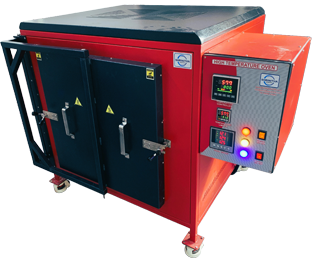
What Is an Industrial Oven?
An Industrial Oven is a specially designed heating chamber used to expose materials, components, or finished products to controlled temperatures for a specified duration.
Unlike conventional domestic ovens, industrial ovens are engineered around manufacturing requirements, including larger loading capacities, customized chamber dimensions, application-specific heating cycles, and suitable material handling arrangements.
Industrial ovens are commonly used for drying, baking, curing, preheating, coating treatment, and other processes requiring controlled thermal energy.
Shrinitha Scientific Company's Industrial Ovens operate from 100°C to 500°C and can be customized according to the required temperature, material type, batch size, and intended industrial process.
Industrial Oven
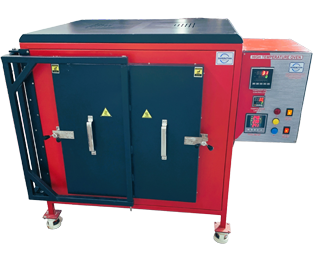
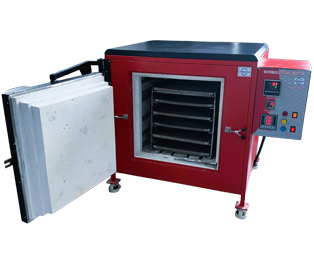
Key Features of Our Industrial Oven
- 1. Wide Operating Temperature Range
Our Industrial Ovens are designed for standard operating temperatures from 100°C to 600°C, making them suitable for a broad range of industrial heating and thermal processing requirements. - 2. Customized Chamber Construction
The internal chamber dimensions, loading capacity, door arrangement, and overall construction can be customized according to the size and quantity of the products being processed. - 3. Application-Specific Heating System
The heating arrangement is selected according to the required operating temperature, material characteristics, production cycle, and available utilities. - 4. Temperature Monitoring and Control
Digital temperature controllers can be incorporated to set and monitor the operating temperature. Programmable controllers may be provided for applications requiring specific heating, holding, and cooling stages. - 5. Efficient Thermal Insulation
Suitable insulation materials are selected according to the operating temperature and chamber design to help retain heat and reduce unnecessary thermal losses. - 6. Air Circulation Arrangement
Natural convection or forced-air circulation can be considered depending on the oven configuration and the required temperature distribution within the working chamber. - 7. Flexible Loading Facilities
The oven can be designed with suitable shelves, trays, racks, trolleys, or other loading arrangements according to the material dimensions and batch requirements. - 8. Industrial-Grade Construction
The enclosure, chamber lining, insulation, door assembly, and control panel are selected to suit the intended industrial environment and operating conditions. - 9. Customized Process Configuration
Heating capacity, chamber size, airflow arrangement, temperature controls, and operating cycle can be tailored to the customer's specific thermal processing application.
Technical Specifications of Industrial Oven
The following table presents the general technical parameters of our Industrial Oven range.
| Parameter | Technical Details |
|---|---|
| Product Name | Industrial Oven |
| Manufacturer | Shrinitha Scientific Company |
| Product Category | Industrial Heating Equipment |
| Standard Temperature Range | 100°C to 500°C |
| Heating System | As per selected model and application |
| Heating Medium | Selected according to the furnace design and process |
| Temperature Control | Digital temperature controller |
| Programmable Control | Optional, as per model |
| Temperature Monitoring | Suitable temperature sensor and controller |
| Air Circulation | Natural convection or forced circulation, as specified |
| Chamber Construction | Insulated industrial heating chamber |
| Chamber Material | Selected according to operating conditions |
| Outer Construction | Industrial fabricated enclosure |
| Loading Arrangement | Shelves, trays, racks, trolley, or customized system |
| Chamber Capacity | Customized according to requirements |
| Operating Mode | Batch or specialized configuration, subject to model |
| Power Supply | As per heating capacity and electrical design |
| Safety Features | As specified for the selected configuration |
| Customization | Available according to customer requirements |
Note: These are general product specifications. Exact chamber capacity, heating power, temperature accuracy, temperature uniformity, airflow rate, insulation thickness, and electrical requirements should be confirmed from the actual model datasheet.
Working Principle of Industrial Oven
An Industrial Oven operates by transferring controlled thermal energy to the material placed inside the heating chamber. The heating system raises the chamber temperature to the required set point and maintains the specified conditions for the intended processing period.
Depending on the oven design, heat is transferred through natural convection, forced-air circulation, radiation, or a combination of suitable heat transfer methods.
The general working process involves the following stages:
Step 1: Loading the Material
The components or materials are placed inside the oven using appropriate shelves, trays, racks, or loading trolleys. Proper positioning and spacing help provide suitable heat exposure.
Step 2: Setting the Temperature
The required operating temperature and heating duration are selected according to the material properties and processing requirements.
Step 3: Controlled Heating
The heating system raises the chamber temperature to the selected set point. The temperature monitoring system helps maintain the required operating conditions.
Step 4: Thermal Processing
The material remains inside the chamber for the specified duration. Depending on the application, the process may involve drying, baking, curing, preheating, or other suitable thermal treatment.
Step 5: Cooling and Unloading
After completion of the heating cycle, the material is cooled according to the process requirements and removed when it is safe to handle.
The actual heating rate, holding time, and cooling procedure depend on the material, component dimensions, batch loading, and intended result.
Types of Industrial Ovens
Shrinitha Scientific Company can manufacture Industrial Ovens in different configurations according to the application and production requirements.
1. Batch Type Industrial Oven
For processing materials in separate production batches.
A Batch Type Industrial Oven is designed to process a defined quantity of materials during each heating cycle. Products are loaded into the chamber, heated for the required duration, and unloaded after the cycle is completed.
It is suitable for industrial components, engineering parts, coating applications, drying operations, and manufacturing processes where materials are processed in individual batches.
2. Industrial Drying Oven
For controlled moisture removal and drying applications.
An Industrial Drying Oven is designed to remove moisture or residual liquids from suitable materials through controlled heating.
It can be used for drying engineering components, industrial materials, compatible coatings, and selected manufactured products before packaging or further processing.
3. Industrial Curing Oven
For heat-assisted curing of compatible coatings and materials.
An Industrial Curing Oven provides controlled heating conditions for materials that require thermal curing or hardening.
It can be configured for suitable paint coatings, adhesives, resins, and other heat-curable materials, subject to their specified curing temperature and process requirements.
4. Industrial Baking Oven
For industrial baking and heat conditioning.
An Industrial Baking Oven is used for controlled heating of suitable materials and products during baking, conditioning, and other specified thermal operations.
Chamber size, heating capacity, and temperature control can be selected according to the material and production cycle.
5. Walk-In Industrial Oven
For large components and high-volume batch loading.
A Walk-In Industrial Oven features a larger chamber designed to accommodate bulky products, large assemblies, or trolley-based loading arrangements.
It is suitable for industrial applications requiring substantial internal space and convenient loading and unloading.
Availability and exact construction should be confirmed according to the customer's requirements.
6. Customized Industrial Oven
For specialized industrial heating processes.
Customized Industrial Ovens are designed around specific material characteristics, chamber dimensions, temperature requirements, production volume, and operating cycles.
They may incorporate special loading arrangements, airflow configurations, programmable controls, or other application-specific features.
Applications of Industrial Oven
Our Industrial Ovens can be configured for various industrial and manufacturing applications within the specified temperature range.
Automotive and Engineering Industries
- Drying of suitable automotive components.
- Baking and curing of compatible coatings.
- Preheating of engineering parts before further processing.
- Thermal conditioning of manufactured components.
- Drying of suitable metal parts after cleaning or surface treatment.
Paint and Surface Coating Industries
- Paint baking and drying.
- Heat curing of compatible industrial coatings.
- Powder coating curing, where the coating and substrate temperature requirements are compatible.
- Curing of suitable protective and decorative finishes.
- Drying of compatible coated components.
Electrical and Electronics Industries
- Drying of suitable electrical components.
- Baking of compatible insulating materials.
- Curing of suitable resins and adhesives.
- Preheating of components before assembly or processing.
- Thermal conditioning of compatible electrical assemblies.
Chemical and Material Processing Industries
- Drying of suitable solid materials.
- Curing of compatible adhesives and resins.
- Thermal conditioning of selected materials.
- Controlled heating of compatible industrial products.
- Drying of suitable samples and materials for testing.
Plastics and Rubber Industries
- Preheating of compatible plastic components.
- Drying of suitable polymer materials.
- Curing of compatible rubber products and compounds.
- Heat conditioning of suitable manufactured parts.
- Thermal processing of selected composite materials.
Other Industrial Applications
- Textile and fabric heat conditioning.
- Paper and packaging material processing.
- Industrial product baking and drying.
- Manufacturing quality control and material testing.
- Research and development thermal processing.
Application suitability depends on the material's thermal stability, process requirements, and compatibility with the selected oven configuration. Processes involving flammable solvents, explosive atmospheres, or hazardous vapours require appropriately engineered equipment and safety provisions.
Advantages of Our Industrial Oven
Controlled Thermal Processing
The oven provides a controlled heating environment for industrial processes requiring specified temperatures and processing durations.
Flexible Operating Temperature
The standard temperature range of 100°C to 500°C supports a variety of industrial heating, drying, curing, baking, and preheating applications.
Customized Chamber Capacity
The working chamber can be designed according to the dimensions, quantity, and arrangement of the products being processed.
Suitable Heat Distribution
Appropriate heating and air circulation arrangements help achieve suitable temperature distribution throughout the working chamber under specified loading conditions.
Improved Thermal Efficiency
Suitable insulation and chamber construction help retain heat and minimize unnecessary energy loss during operation.
Convenient Loading and Unloading
Shelves, trays, racks, and trolley arrangements can be selected according to the material size and production workflow.
Application-Specific Controls
Temperature controllers and optional programmable systems can be configured according to the requirements of the heating cycle.
Adaptability Across Industries
Customized Industrial Ovens can be designed for different manufacturing processes, from component drying to specialized curing and thermal conditioning.
Why Choose Shrinitha Scientific Company?
Shrinitha Scientific Company manufactures Industrial Ovens based on the technical and operational requirements of different industrial applications.
- Indian manufacturer of industrial heating equipment.
- Standard Industrial Oven temperature range from 100°C to 500°C.
- Customized chamber dimensions and batch capacities.
- Application-specific heating and insulation arrangements.
- Digital temperature control and optional programmable controls.
- Flexible loading arrangements for industrial materials and components.
- Technical assistance in selecting suitable oven configurations.
We focus on understanding the customer's material, process temperature, batch requirements, and production workflow to provide an appropriate industrial heating solution.
Frequently Asked Questions (FAQs)
Q1. What is an Industrial Oven used for?
An Industrial Oven is used for controlled heating, drying, baking, curing, preheating, and thermal conditioning of materials and components. It is widely used in manufacturing, engineering, automotive, coating, electrical, and material processing industries.
Q2. What is the standard temperature range of Shrinitha Scientific Company's Industrial Oven?
Our standard Industrial Ovens operate within a temperature range of 100°C to 500°C. The actual working temperature depends on the selected model and the requirements of the intended process.
Q3. Can the Industrial Oven be customized?
Yes. Chamber dimensions, batch capacity, loading arrangements, heating systems, and temperature controls can be customized according to the customer's application and production requirements.
Q4. What heating system is used in your Industrial Oven?
The heating system is selected according to the required temperature, chamber capacity, application, and available utilities. The exact heating arrangement should be confirmed for the selected model.
Q5. Is forced-air circulation available?
Forced-air circulation can be incorporated where required. A circulation blower helps move heated air through the chamber and can support suitable heat distribution across the loaded materials.
Q6. Can the Industrial Oven be used for powder coating?
An appropriately configured Industrial Oven can be used for curing compatible powder coatings when the required part temperature and curing cycle fall within the oven's operating capabilities. The coating manufacturer's curing specifications should be followed.
Q7. What is the difference between an Industrial Oven and an Industrial Furnace?
An Industrial Oven is generally used for controlled heating, drying, curing, baking, and similar thermal processing applications at moderate temperatures. An Industrial Furnace is typically designed for higher-temperature processes such as metal heat treatment, melting, and specialized metallurgical operations. The distinction depends on the specific equipment design and intended process.
Q8. Is the Industrial Oven suitable for continuous production?
The standard configuration depends on the selected model. Batch ovens process materials in individual cycles, while continuous ovens require a dedicated conveyor or material transport arrangement. The required production mode should be specified during the design stage.
Q9. What information is required to request a quotation?
Please provide the material to be processed, required operating temperature, chamber dimensions, batch capacity, heating duration, loading arrangement, and available power supply. These details help determine a suitable oven configuration.
Request a Quote for Industrial Oven
Looking for an Industrial Oven for your manufacturing facility or thermal processing application?
Shrinitha Scientific Company manufactures customized Industrial Ovens with a standard operating temperature range of 100°C to 500°C.
Contact us with your application details, required temperature, chamber dimensions, and batch capacity to discuss a suitable industrial oven configuration.
Shrinitha Scientific Company – Manufacturer of Customized Industrial Ovens in India.