- PH: +91 8828443924
- Email: Response@ShrinithaFurnace.Com

Rotary Tube Furnace
Rotary Tube Furnace Manufacturer & Exporter in India
Shrinitha Scientific is a manufacturer and exporter of Laboratory Rotary Tube Furnaces in India, designed for specialized high-temperature processing of powders, granules, particulate materials and other suitable substances.
Our Rotary Tube Furnaces are available with operating temperature capabilities ranging from 500°C to 1700°C, depending on the selected model and configuration. These furnaces are designed to provide controlled heating while rotating the process tube, allowing materials to move, tumble and receive thermal exposure during processing.
The rotary arrangement makes these furnaces suitable for laboratory research, material synthesis, powder calcination, ceramic processing, catalyst preparation, thermal treatment and advanced material development.
With application-specific configurations, Shrinitha Scientific offers rotary furnace solutions for research laboratories, universities, pilot-scale material processing and industrial R&D facilities.
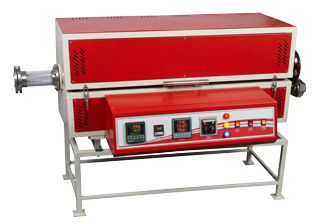
What is a Rotary Tube Furnace?
A Rotary Tube Furnace, also known as a Rotary Furnace or Rotary Reactor Furnace, is a high-temperature heating system consisting of a rotating process tube positioned within an electrically heated furnace chamber.
During operation, the tube rotates at a selected speed while the material inside moves along the tube and through the heated region. This movement helps expose different portions of the material to the heated environment and can improve mixing and thermal contact compared with processing stationary powder beds.
Rotary Tube Furnaces are particularly useful for processing particulate materials that benefit from continuous movement during heating. Depending on the configuration, they can support batch processing or controlled feeding and discharge for continuous or semi-continuous operations.
Shrinitha Scientific manufactures Rotary Tube Furnaces with temperature capabilities from 500°C to 1700°C, with tube material, heating elements, rotation mechanism and process-control arrangements selected according to the intended application.
Key Features of Rotary Tube Furnace
- Operating temperature capability from 500°C to 1700°C, depending on model.
- Rotating tube arrangement for material movement during heating.
- Suitable for powders, granules and compatible particulate materials.
- Electrically heated furnace chamber.
- Controlled rotation mechanism.
- Digital temperature indication and control.
- Programmable heating cycles available as per model.
- Single-zone or multi-zone heating configurations, as required.
- Suitable for batch and customized continuous-processing arrangements.
- Optional gas inlet and outlet provisions.
- Controlled atmosphere options for compatible processes.
- Adjustable rotation speed, depending on configuration.
- Optional inclination arrangement for regulating material movement.
- Process tube material selected according to temperature and chemical compatibility.
- Customizable tube dimensions and heated-zone length.
- Suitable for laboratory research, material development and pilot-scale processing.
Technical Specifications of Rotary Tube Furnace
| Parameter | Specification |
|---|---|
| Product Name | Rotary Tube Furnace |
| Alternate Names | Rotary Furnace / Rotary Reactor Furnace |
| Temperature Range | 500°C to 1700°C |
| Heating System | Electrical Resistance Heating |
| Furnace Type | Rotating Tube-Type Furnace |
| Rotation Mechanism | Motorized rotary drive |
| Rotation Speed | Model-dependent / customizable |
| Heating Zones | Single-zone or multi-zone, as required |
| Process Tube | Quartz / Alumina / Other suitable material, depending on temperature and application |
| Tube Diameter | Customizable |
| Heated Zone Length | As per model and application |
| Material Movement | Rotary tumbling / mixing |
| Inclination | Optional, depending on configuration |
| Temperature Control | Digital / PID-based control, as per model |
| Temperature Programming | Available as per model |
| Atmosphere | Air or controlled atmosphere, depending on configuration |
| Gas Supply | Optional gas inlet, outlet and flow-control arrangement |
| Feeding System | Optional, for suitable configurations |
| Discharge System | Optional, depending on process requirements |
| Process Mode | Batch / Customized continuous or semi-continuous |
| Power Supply | As per furnace configuration |
| Customization | Available according to process requirements |
Technical note: The 500°C–1700°C range represents the available temperature capability across suitable configurations. Maximum operating temperature depends on the heating elements, process tube, insulation, atmosphere and furnace design. Rotation speed, tube dimensions, throughput and continuous operation are model-specific and should be confirmed before ordering.
Working Principle of Rotary Tube Furnace
The working principle of a Rotary Tube Furnace combines controlled electrical heating with continuous or intermittent rotation of the process tube.
1. Material Loading
The required powder, granules or particulate material is loaded into the rotary process tube. For batch operation, the material is loaded before the heating cycle. For suitable continuous configurations, a feeding arrangement may be provided.
2. Tube Rotation
The drive mechanism rotates the process tube at the selected speed. As the tube rotates, the material moves and tumbles inside it, helping distribute the material through the heated region.
3. Controlled Heating
Electrical heating elements generate heat around the process tube. The temperature controller regulates the heating system according to the selected temperature and heating profile.
4. Material Treatment
The rotating material receives thermal exposure as it moves through the heated section. Depending on the material and process, this can support calcination, thermal decomposition, sintering, oxidation, reduction or other suitable thermal treatments.
5. Controlled Atmosphere Processing
For compatible configurations, process gases can be introduced through suitable tube-end connections. This allows selected processes to be performed under an inert or other specified atmosphere.
6. Material Discharge
After completion of the process, the treated material is removed from the tube. In customized continuous systems, a discharge arrangement may collect the processed material during operation.
Types of Rotary Tube Furnace
Shrinitha Scientific can provide different Rotary Tube Furnace configurations according to material characteristics, process temperature and operating requirements.
1. Horizontal Rotary Tube Furnace
A horizontal Rotary Tube Furnace uses a horizontally positioned rotating tube within the heating chamber.
This configuration is suitable for laboratory powder processing, thermal treatment, calcination, catalyst preparation and other applications requiring material movement during heating.
Key applications:
- Powder calcination
- Ceramic material processing
- Thermal treatment of granules
- Catalyst preparation
- Laboratory material research
2. Inclined Rotary Tube Furnace
An inclined Rotary Tube Furnace incorporates an angled tube arrangement. The inclination, combined with rotation, can influence the movement and residence time of material inside the heated tube.
This configuration can be considered for applications where material transport through the heated section is required.
Key features:
- Adjustable inclination, where provided
- Controlled material movement
- Suitable for powder and granular processing
- Optional feeding and collection arrangements
3. Multi-Zone Rotary Tube Furnace
A multi-zone Rotary Tube Furnace incorporates separate heating zones along the process tube. Each zone can be configured to support different temperature requirements within a thermal process.
It is suitable for applications requiring staged heating, controlled thermal profiles or different treatment conditions along the tube.
Key applications:
- Multi-stage thermal treatment
- Material synthesis
- Controlled calcination
- Advanced powder processing
- Research requiring different temperature regions
4. Controlled Atmosphere Rotary Tube Furnace
A Controlled Atmosphere Rotary Tube Furnace is designed with appropriate gas inlet and outlet provisions for processing materials under a specified gas environment.
Depending on the process, suitable inert or reactive gases may be introduced to support oxidation, reduction or other gas-solid reactions.
The actual gas system, sealing arrangement and pressure conditions depend on the selected configuration.
5. Continuous Rotary Tube Furnace
A customized continuous Rotary Tube Furnace can incorporate a feeding system, rotating tube and material collection arrangement to support continuous or semi-continuous processing.
The movement of material through the heated region depends on the tube inclination, rotation speed, material properties and feed rate.
Continuous operation and throughput should be confirmed according to the required material and furnace design.
Applications of Rotary Tube Furnace
Rotary Tube Furnaces are suitable for thermal processing applications involving powders, granular materials and compatible particulate substances.
1. Powder Calcination
Used for heating powder materials to achieve thermal decomposition, phase transformation or other required material changes.
Typical materials include ceramic powders, mineral-based materials and suitable chemical precursors.
2. Ceramic Material Processing
Suitable for thermal treatment of ceramic powders, granules and selected advanced ceramic materials.
Applications may include calcination, powder preparation and controlled thermal treatment.
3. Catalyst Preparation and Activation
Rotary Tube Furnaces can be used for thermal treatment, calcination and activation of suitable catalyst materials under selected atmospheric conditions.
4. Battery Material Research
Suitable for research involving battery-related powders, precursor materials and selected electrode materials.
Applications may include calcination, thermal treatment and material preparation, depending on the process requirements.
5. Powder Metallurgy
Used for thermal processing of compatible metal powders and particulate materials.
Depending on the configuration and process atmosphere, applications may include powder treatment, roasting, reduction studies and material development.
6. Mineral and Ore Processing
Suitable for laboratory-scale thermal treatment of minerals, ores and selected inorganic materials.
Applications may include calcination, roasting and controlled thermal reaction studies.
7. Carbon Material Processing
Can be configured for suitable thermal processing of carbon-based materials, including carbonization, activation and other controlled heating applications.
The maximum process temperature and atmosphere depend on the material and furnace configuration.
8. Advanced Materials Research
Suitable for research involving advanced powders, functional materials, inorganic compounds and specialized material formulations.
9. Chemical and Industrial R&D
Used in laboratories for thermal reaction studies, material development, process optimization and pilot-scale research.
Advantages of Rotary Tube Furnace
Improved Material Movement
The rotating tube keeps suitable particulate materials moving during heating. This can help reduce stationary material accumulation and promote more consistent thermal exposure.
Enhanced Mixing During Processing
Rotational movement encourages mixing and tumbling of powders and granules, which can be beneficial for processes requiring repeated exposure of material surfaces.
Controlled High-Temperature Processing
The furnace supports thermal processing from 500°C to 1700°C across suitable configurations, allowing users to select a furnace appropriate to their application.
Flexible Heating Configuration
Single-zone and multi-zone configurations can be selected according to the required temperature profile and material treatment process.
Batch and Continuous Processing Options
Depending on the model, the furnace can be configured for batch processing or customized feeding and discharge arrangements.
Controlled Atmosphere Compatibility
Suitable gas connections can be incorporated for processes requiring a specified atmosphere during thermal treatment.
Application-Specific Design
The process tube, heating system, rotation arrangement and control system can be selected according to the material and operating conditions.
Research and Pilot-Scale Suitability
The furnace is suitable for laboratory research, experimental material development and selected pilot-scale processing applications.
Process Tube Materials and Selection
The process tube is an important component of a Rotary Tube Furnace because it comes into direct contact with the material being processed.
The appropriate tube material should be selected according to the operating temperature, chemical environment, material characteristics and required service conditions.
| Tube Material | General Application Considerations |
|---|---|
| Quartz | Suitable for compatible processes at comparatively lower temperatures within its rated operating limits. |
| High-Purity Alumina | Suitable for many high-temperature applications, including selected configurations above 1200°C. |
| Ceramic / Refractory Materials | Used where suitable thermal and chemical resistance is required. |
| Metal Alloy Tubes | Can be considered for compatible processes within the alloy's temperature and chemical limitations. |
The selection of tube material must consider maximum temperature, thermal shock, chemical compatibility and mechanical loading. A tube material suitable for one atmosphere or temperature may not be appropriate for another.
At higher temperatures, suitable ceramic tubes and heating elements must be selected according to the required operating conditions.
Temperature Control and Heating System
The Rotary Tube Furnace can be equipped with a suitable temperature-control system according to the selected model.
Possible control features include:
- Digital temperature display
- PID-based temperature regulation
- Programmable heating cycles
- Temperature holding and soaking control
- Independent control for multiple heating zones
- Thermocouple-based temperature monitoring
- Over-temperature protection, where specified
- Rotation speed control
- Process monitoring and data logging, as required
The controller, thermocouple type and heating elements should be selected according to the operating temperature and process requirements.
For multi-zone applications, independent temperature settings may be provided where supported by the selected configuration.
Atmosphere and Gas Control System
A Rotary Tube Furnace can be configured for processes requiring a controlled gas environment.
Depending on the application, the gas-handling arrangement may include:
- Gas inlet and outlet connections
- Gas flow meters
- Gas regulators
- Mass flow controllers
- Gas switching arrangements
- Purging provisions
- Suitable rotary seals and tube-end connections
- Exhaust arrangements
- Customized gas control panels
The gas system must be compatible with the process tube, operating temperature, material being processed and required operating pressure.
Flammable, toxic or reactive gases require suitable gas-handling engineering, safety equipment and exhaust provisions. These requirements should be finalized before selecting the furnace configuration.
Optional Accessories and Customization
Shrinitha Scientific can provide application-specific accessories and customization options depending on the furnace model.
| Accessory / Option | Purpose |
|---|---|
| Variable-Speed Rotary Drive | Controls process tube rotation speed |
| Adjustable Inclination | Helps regulate material movement in compatible designs |
| Powder Feeding System | Supports controlled material feeding |
| Material Collection System | Collects processed material |
| Quartz Process Tube | Suitable for compatible lower-temperature applications |
| Alumina Process Tube | Suitable for compatible high-temperature applications |
| Multi-Zone Heating | Supports different temperature regions |
| Gas Flow Meter | Indicates gas flow |
| Mass Flow Controller | Regulates gas flow in compatible systems |
| Programmable Temperature Controller | Supports programmed thermal cycles |
| Data Logging System | Records selected process parameters |
| Customized Tube Dimensions | Accommodates application-specific material requirements |
| Safety and Monitoring Arrangements | Selected according to operating conditions |
Actual accessory availability and compatibility depend on the model, temperature and process requirements.
Why Choose Shrinitha Scientific Rotary Tube Furnace?
Shrinitha Scientific offers laboratory furnace solutions for specialized thermal processing and material research.
- Manufacturer and exporter of laboratory furnaces in India.
- Rotary Tube Furnace configurations with temperature capabilities from 500°C to 1700°C.
- Suitable for powder, granule and particulate material processing.
- Application-oriented furnace design.
- Options for single-zone and multi-zone heating.
- Customizable tube dimensions and heating arrangements.
- Rotation and material movement options according to model.
- Controlled atmosphere provisions for compatible processes.
- Suitable for laboratory research and industrial R&D applications.
- Technical assistance for selecting a suitable furnace configuration.
Our focus is on providing furnace solutions aligned with the actual temperature, material, process and laboratory requirements of our customers.
Rotary Tube Furnace Manufacturer & Exporter in India
Shrinitha Scientific manufactures and exports Laboratory Rotary Tube Furnaces with temperature capabilities from 500°C to 1700°C, designed for controlled thermal processing of powders, granules and other suitable particulate materials.
Our rotary furnace solutions are suitable for material research, powder calcination, catalyst preparation, ceramic processing, battery material research, thermal treatment and specialized laboratory applications.
Whether your requirement involves batch processing, controlled atmosphere heating, multi-zone thermal treatment or a customized rotary processing arrangement, Shrinitha Scientific can assist in selecting a suitable furnace configuration.
Contact Shrinitha Scientific with your required temperature, material details, tube dimensions and process requirements for a suitable Rotary Tube Furnace solution.
Frequently Asked Questions (FAQ)
1. What is a Rotary Tube Furnace?
A Rotary Tube Furnace is a high-temperature furnace in which the process tube rotates during heating. The rotation allows suitable powders and granular materials to tumble and move through the heated region.
2. What is the operating temperature range of Shrinitha Scientific Rotary Tube Furnace?
Shrinitha Scientific manufactures Rotary Tube Furnaces with temperature capabilities ranging from 500°C to 1700°C, depending on the selected model and configuration.
3. What is the difference between a Rotary Tube Furnace and a conventional Tube Furnace?
A conventional tube furnace generally keeps the process tube stationary, whereas a Rotary Tube Furnace rotates the tube during processing.
The rotary arrangement is particularly useful for particulate materials that benefit from movement and mixing during heating.
4. What materials can be processed in a Rotary Tube Furnace?
Depending on the process tube and furnace configuration, materials may include ceramic powders, mineral materials, catalyst precursors, battery-related powders, granular substances and other suitable particulate materials.
5. Can the Rotary Tube Furnace be used for powder calcination?
Yes. Rotary Tube Furnaces are suitable for calcination of compatible powders and granules. The required temperature, atmosphere and residence time depend on the material and process.
6. Is continuous processing possible?
Continuous or semi-continuous processing can be considered in suitable configurations incorporating feeding and discharge arrangements.
The actual throughput depends on the material, tube dimensions, rotation speed, inclination and heating profile.
7. Can the rotation speed be adjusted?
A variable-speed rotary drive can be provided depending on the selected model. The required speed should be selected according to material characteristics and processing requirements.
8. Can the furnace operate under a controlled atmosphere?
Yes. Suitable gas inlet and outlet provisions can be incorporated for compatible controlled-atmosphere applications.
The gas type, flow rate and sealing arrangement depend on the intended process.
9. Can the furnace be supplied with multiple heating zones?
Yes. Single-zone and multi-zone configurations can be considered according to the required thermal profile and application.
10. Which tube material is suitable for a 1700°C Rotary Tube Furnace?
For high-temperature applications, suitable high-purity alumina or other compatible refractory materials may be considered. The final tube selection depends on the actual operating temperature, atmosphere and material compatibility.
11. Can the Rotary Tube Furnace be customized?
Yes. Tube dimensions, heating zones, rotation arrangement, feeding and collection systems, temperature control and atmosphere provisions can be customized according to application requirements.
12. How do I select the right Rotary Tube Furnace?
The main selection parameters include:
- Required operating temperature
- Type and quantity of material
- Tube diameter and heated length
- Required rotation speed
- Batch or continuous processing requirement
- Heating duration and thermal profile
- Process atmosphere
- Required throughput
Providing these details helps determine a suitable furnace configuration.